

Park · Ottawa · ⭐ 9.5/10 · 1869 reviews · updated: 2026-08-04 20:17:46
Address: 25 Range Rd, Ottawa, ON K1N 8J4, Canada
Strathcona Park — the Edwardian riverside park of Sandy Hill
Strathcona Park is a fifteen-acre slope of lawn and old trees running down to the west bank of the Rideau River, with a cast-iron fountain from Paris standing at the top of the rise and embassies looking on from the streets behind. It is the eastern edge of Sandy Hill, and it does something few city parks manage: it is simultaneously a formal Edwardian composition, a working neighbourhood park with a wading pool and a ball diamond, and — every summer since 1986 — an open-air theatre where masked actors perform under the trees.
Highlights
- The Lord Strathcona Fountain — the park’s landmark, funded by Lord Strathcona in 1909 and formally opened on 1 July 1910 by Mayor Hopewell. Designed by the French sculptor Mathurin Moreau in a beaux-arts manner and cast at the Fonderies d’Art du Val d’Osne in Paris, it carries four allegorical figures representing the four continents as the nineteenth century understood them — Europe, Asia, Africa and America. A twin of it stands in downtown Buenos Aires.
- Odyssey Theatre under the stars — since 1986 the park has hosted Ottawa’s professional summer company, which works in masks, commedia dell’arte, puppetry and physical theatre, drawing thousands of spectators to the riverbank each season.
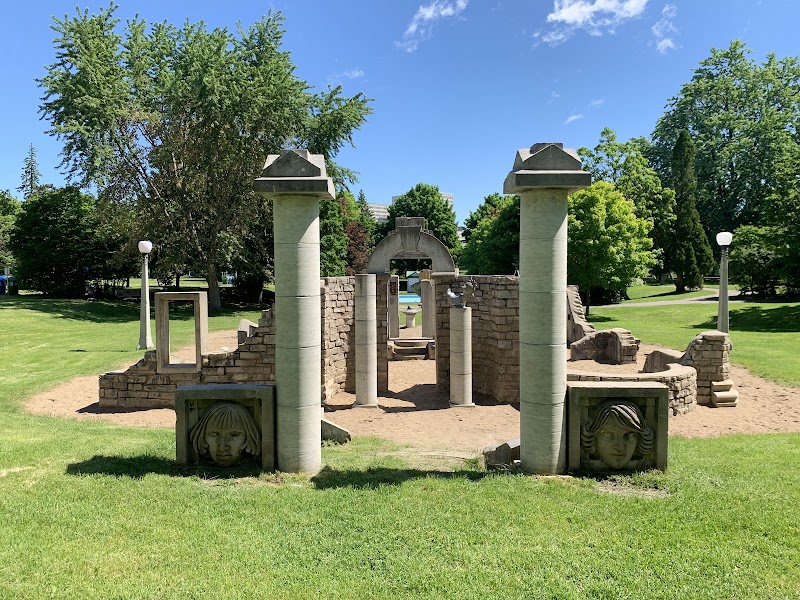
- “Strathcona’s Folly” — the artist-designed play structure installed in 1992, a sandbox and climbing piece assembled from architectural salvage, including stonework from the old Centre Block of Parliament, and openly inspired by Mackenzie King’s ruin garden at Kingsmere.
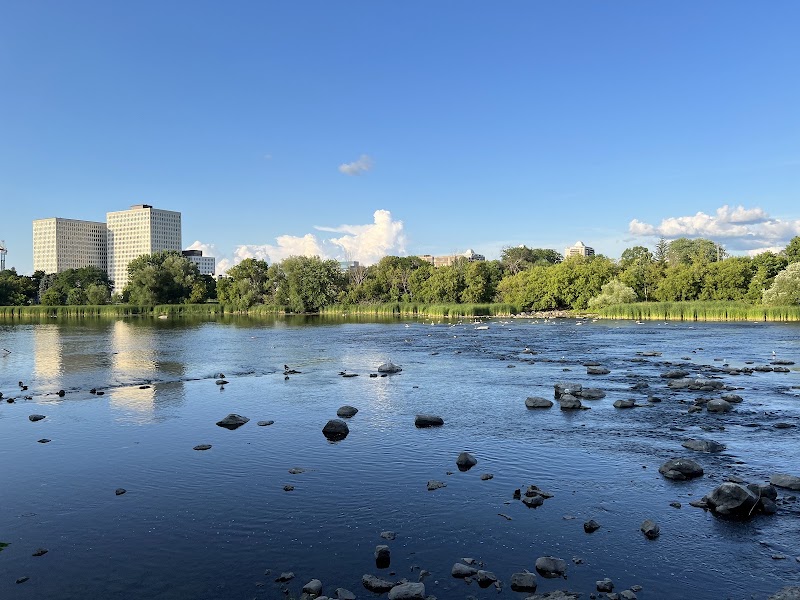
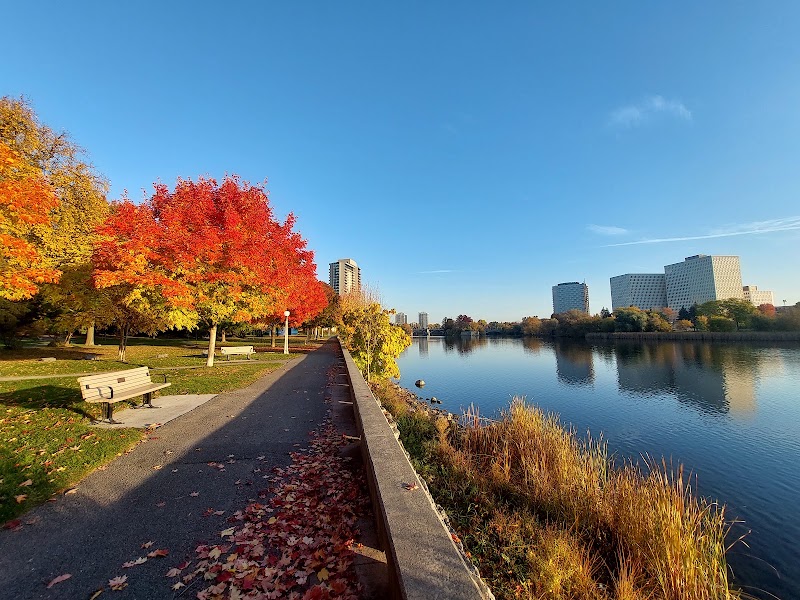
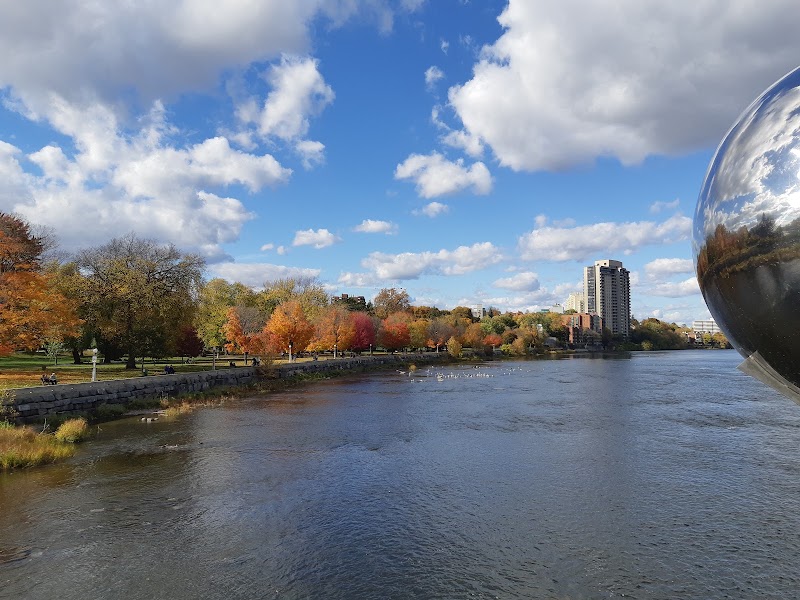
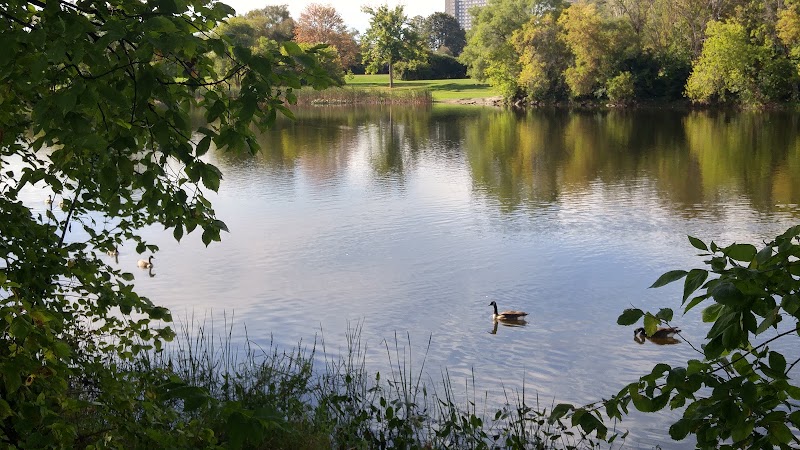
- The river frontage — a long, quiet edge on the Rideau River with benches, mature trees and the capital pathway network running through, linking on to Dutchy’s Hole Park and, across the water by way of a converted rail bridge, to Vanier.
- The hill — gentle enough for a picnic in July and steep enough for tobogganing and snowboarding once the snow settles, which is what the local children have used it for since the park opened.
- The embassy skyline — large stately houses along the park’s edge, a number of them now diplomatic missions, giving the whole composition a quietly formal frame that most neighbourhood parks lack.
What you’ll find
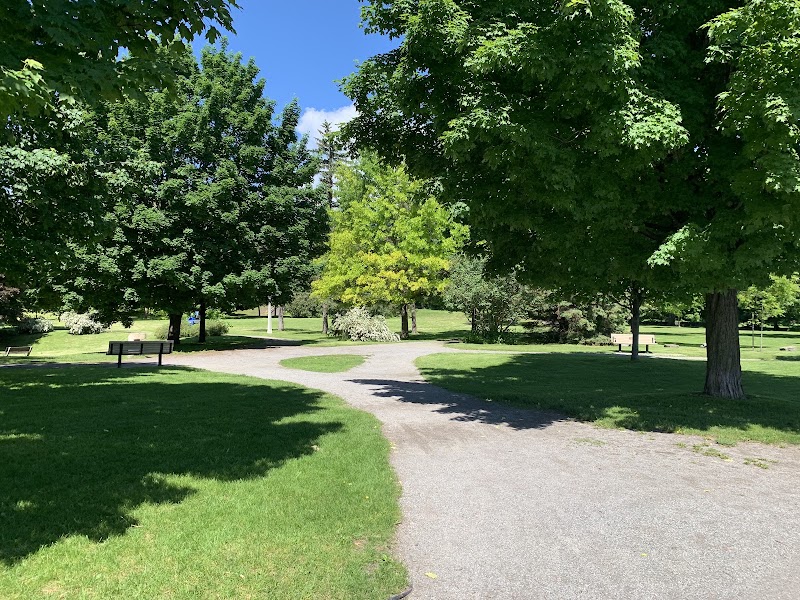
The park covers about 6.1 hectares — fifteen acres — and reads as two halves. The upper part is the formal one: the fountain on the rise, mown lawn, big trees and a sense of deliberate design. The lower part, toward the water, is looser and shadier, with paths along the bank and the river doing the work. It has been a City of Ottawa park since 1987 and is used exactly as a neighbourhood park should be, by students from the nearby university, families from Sandy Hill and cyclists passing through on the riverside route.
- The historic fountain and its surrounding lawn, the visual centre of the park.
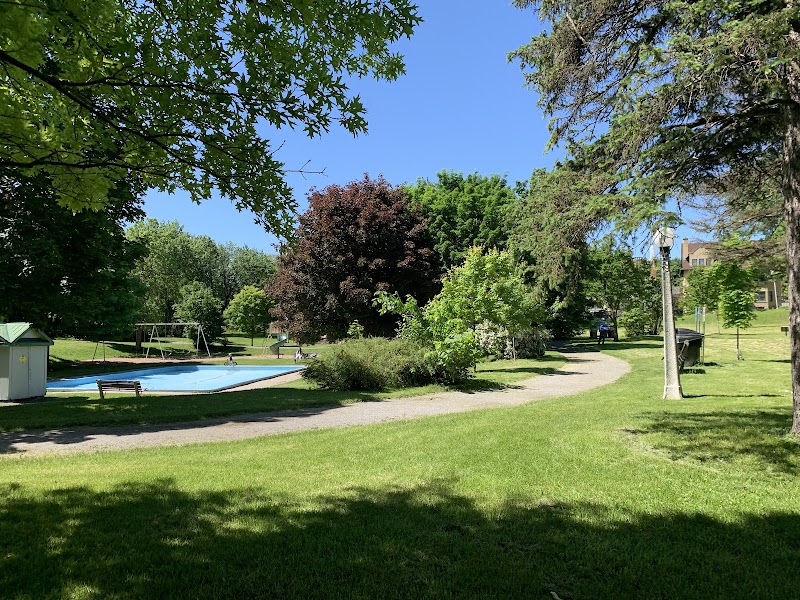
- A wading pool for small children in summer, on ground where the park’s original ornamental ponds once sat.
- The award-winning salvage play structure and adjoining play area.
- A baseball diamond dating in its origins to the 1920s, plus open field space.
- Riverbank benches, picnic tables and shaded walking paths beneath mature trees.
- Direct connections to the Rideau River pathway, with designated space where dogs can run.
Things to do — and who it’s for
- Families with young children — the wading pool, the salvage playground and safe open lawn make this one of the better summer afternoons in the inner city.
- Theatregoers — Odyssey Theatre’s open-air season turns the park into a professional stage every summer, a genuinely unusual thing to find in a neighbourhood green space.
- Runners and cyclists — the riverside pathway runs straight through, connecting north and south along the Rideau with almost no road crossings.
- Students and readers — the university’s campus is a short walk away, and the shaded riverbank is the quietest study spot in the district.
- Winter sledders — the hill is a known local toboggan run, and it fills with children the first weekend the snow holds.
- Architecture and history walkers — the fountain, the salvage folly and the surrounding Edwardian and Victorian houses make a compact, rewarding loop.
Getting there & practical
Strathcona Park forms the eastern boundary of Sandy Hill, the historic residential district just east of the downtown core, and sits directly on the Rideau River. By rail, uOttawa station on O-Train Line 1, the Confederation Line, is the most convenient access and leaves a walk of roughly a quarter of an hour east through the neighbourhood; Rideau station on the same line works from the north, and Lees station from the south. Several OC Transpo bus routes serve Sandy Hill itself. The park is free to enter and open year-round with no gate — it is a City of Ottawa park, not a ticketed site, and the only paid element in the vicinity is street parking in the surrounding residential district, which is limited and tightly regulated. Facilities are seasonal: the wading pool runs through the warm months, and Odyssey Theatre performances have their own schedule and ticketing during the summer season. The riverside paths are level and easy; the upper lawn is on a slope. Allow forty-five minutes for a walk, or a full afternoon with children.
When to visit
Spring is loud and brief — the Rideau River runs hard with meltwater right past the park, the lawn greens up through late April and May, and the whole slope dries out just in time for the season. Summer is the park’s peak: the wading pool opens, families spread out under the trees, and the theatre season brings evening audiences to the riverbank, which is when the park is at its most memorable. Autumn is the quiet reward — mature hardwoods turning above the water through late September and October, students back on the benches, and the light coming in low across the river. Winter is not something to be endured here but something the park is actually good at, which is the Ottawa pattern: the hill becomes a toboggan and snowboard run, the bare trees open up the view across the frozen river toward Vanier, and the fountain under snow is one of the more photogenic sights in the district. Expect real cold — January regularly runs between minus ten and minus twenty — and note that the wading pool and theatre are strictly warm-season features.
Good to know
The ground was originally the swampy floodplain of the Rideau River, unbuildable, and was used instead as the Dominion Rifle Range, where soldiers trained before departing for the South African War. Rifle practice was pushed out as housing crept east and weapons grew more powerful. In 1900 a petition circulated to name a major downtown thoroughfare after Lord Strathcona; it was withdrawn once a park was proposed instead, and on 10 January 1901 the Parks Board voted the name Strathcona Park. Excavation began on 1 October 1904. Two designs had been put forward — one by Frederick Todd, Canada’s first landscape architect, favouring trees and playgrounds, and one by Robert Surtees, engineer of the Ottawa Improvement Commission, proposing artificial lakes in an English garden manner. Surtees’s plan won; the lakes were dug and the ground sodded by March 1905 and the water first went in that August, with the park opening in 1907. Lord Strathcona — Donald Smith, the Hudson’s Bay Company and Bank of Montreal president who drove the Canadian Pacific Railway’s last spike in 1885 and raised the Lord Strathcona’s Horse regiment for the South African War in 1900 — provided the money for the fountain in 1909, and it was inaugurated on 1 July 1910. From the 1920s the riverbank here served as one of Ottawa’s four civic beaches, drawing thousands on hot days, while the baseball diamond hosted neighbourhood clubs including the Sandy Hill Red Sox. The ornamental lakes did not age well: complaints about green slime began in 1924, and the lagoons were filled in during the early 1940s, when the fountain pump was also shut off as a wartime economy. Swimming was banned in 1942 over river pollution, and during the Second World War the Women’s Royal Canadian Naval Service trained on the site. A modern summer house designed by architect W.E. “Ted” Fancott replaced the original in the early 1960s and was crushed by a snow load in February 1963, never to be rebuilt. The City of Ottawa took over the park in 1987, Odyssey Theatre began performing here in 1986, and “Strathcona’s Folly” was installed in 1992.
Visitor tips
- Approach from the neighbourhood side rather than the river path — the fountain sits on the rise, and coming up to it from below is how the park was designed to be read.
- Check the Odyssey Theatre schedule before a summer evening visit; performances are ticketed and the seating area takes over part of the park while they run.
- Bring proper boots in winter. The hill is a genuine toboggan run and gets packed and icy fast once the local children have worked on it for a weekend.
Questions & answers
Is Strathcona Park free? Yes. It is a City of Ottawa park, open year-round with no gate and no admission charge. Odyssey Theatre performances staged in the park during the summer are ticketed separately, but the park itself is always free.
What is the fountain and where did it come from? It was paid for by Lord Strathcona in 1909, designed by the French sculptor Mathurin Moreau and cast at the Fonderies d’Art du Val d’Osne in Paris. Its four allegorical figures represent the four continents as understood in the nineteenth century, and it was formally opened on 1 July 1910 by Mayor Hopewell. A twin fountain stands in downtown Buenos Aires.
Who was Lord Strathcona? Donald Smith, 1st Baron Strathcona and Mount Royal — a Scottish-born financier who led the Hudson’s Bay Company and the Bank of Montreal, drove the last spike of the Canadian Pacific Railway in 1885, raised the Lord Strathcona’s Horse regiment at his own expense for the South African War in 1900, and served as Canada’s High Commissioner in London.
Is there theatre in the park? Yes. Odyssey Theatre, Ottawa’s professional summer company, has performed open-air productions on the riverbank here since 1986, working in masks, commedia dell’arte, puppetry and physical theatre.
What is there for children? A wading pool in the warm months, open lawn, a baseball diamond and “Strathcona’s Folly” — an artist-designed play structure installed in 1992 and built from architectural salvage, including stone from Parliament’s old Centre Block.
How do I get there by O-Train? Line 1, the Confederation Line, is the relevant line: uOttawa station is the closest practical access and leaves about a fifteen-minute walk east through Sandy Hill, with Rideau station and Lees station usable from the north and south respectively. Several OC Transpo bus routes also serve the neighbourhood.
Can you swim in the river here? No. The riverbank served as one of Ottawa’s civic beaches from the 1920s, but public swimming was prohibited in 1942 because of river pollution and has not returned. The wading pool is the swimming option today.
What happened to the park’s lakes? They were the centrepiece of Robert Surtees’s original 1904–1905 design, but they silted and fouled — complaints about green slime date from 1924 — and were filled in during the early 1940s. The wading pool now occupies part of that ground.
Is it good in winter? Very. The hill is a well-used toboggan and snowboard slope, the bare trees open the view across the frozen Rideau River, and the snow-covered fountain is a local photographic fixture. Dress for serious cold.
Photos
Show 1 more photos
Visitor reviews
Reviews last updated: 2026-08-04 20:17:46
Data is refreshed monthly. Sources: ottawa.name and editorial picks based on reviews.
My favourite place to walk my dog. Right by the beautiful water. In spring you can see ducklings, geese and amazing wildlife. The fall colours are breathtaking. Very scenic. Beware of fast cyclists, though.
This was a really nice surprise today when looking for somewhere I could rest for a bit while waiting to pick up someone at Ottawa University. There's shade, trails, benches and a pedestrian bridge over the Rideau River.…
This park is absolutely stunning in every season. Living just a 2-minute walk from this place was a real luxury… plenty of benches, open space and a playground make it a perfect place to relax/rest.
This is a great park where you can play baseball, walk along the Rideau River or watch a performance. (During an August visit I saw a very exciting production of "The Miser", an open-air play by the Odyssey Theatre as pa…
A nice little park in the middle of the city where you can relax and admire a wonderful sunset. I was here during the day, but it seemed to me that watching the sunset must be incredible. There's free parking, but it fil…