

Park · Ottawa · ⭐ 9.1/10 · 2450 reviews · updated: 2026-08-04 20:17:45
Address: Elgin St, Ottawa, ON K1P 5J2, Canada
Confederation Park — the capital’s outdoor memorial room
Confederation Park is barely 2.63 hectares, which by park standards is a rounding error, and yet more national memory is packed into it than into green space ten times its size. A granite fountain that once played in Trafalgar Square, a twenty-metre totem pole carved on the Pacific coast, a monument to Indigenous veterans, a Boer War soldier in bronze, a memorial to animals that served in war — all of it under old shade trees, a few minutes’ walk from Parliament Hill, with the Rideau Canal running along the eastern edge. For eleven months a year it is a quiet downtown breathing space. For the other few weeks it is the loudest park in Ottawa, because this is where the jazz festival’s main stage goes up.
Highlights
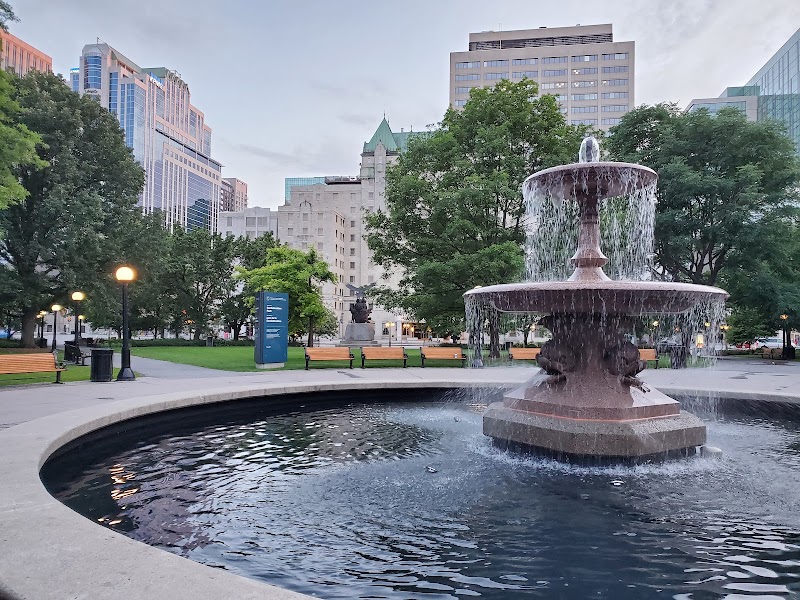
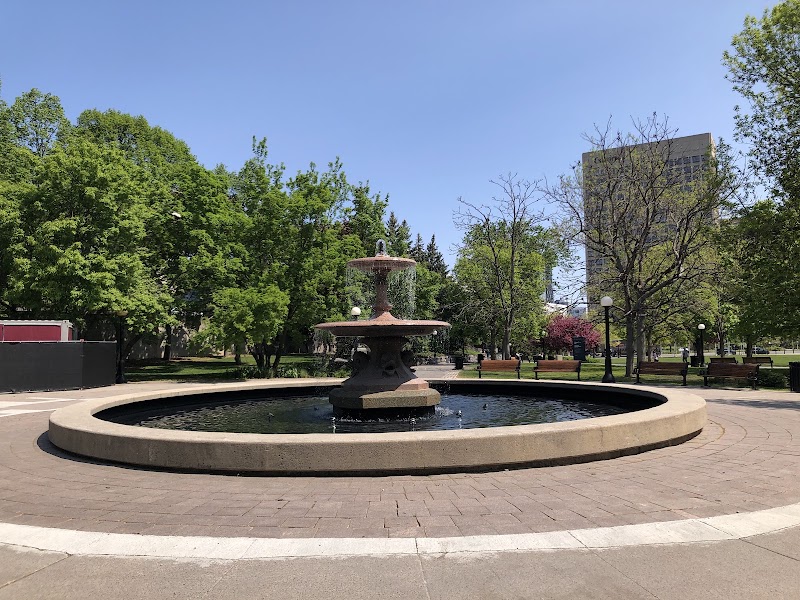
- The Colonel By Memorial Fountain — a Peterhead granite basin designed by Sir Charles Barry, architect of the British Houses of Parliament. It stood in Trafalgar Square in London from 1845 until it was removed in the late 1930s to make way for larger fountains; Canada accepted the pair as a gift, and this one became a memorial to Lieutenant-Colonel John By, founder of Bytown. Its identical twin stands in Wascana Park in Regina.
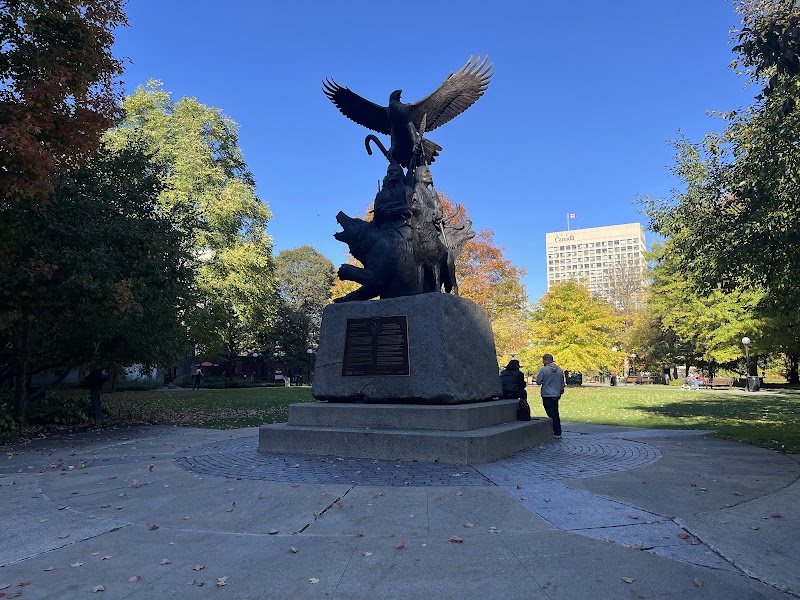
- The National Aboriginal Veterans Monument — designed by Lloyd Pinay of the Peepeekisis First Nation in Saskatchewan and unveiled by Governor General Adrienne Clarkson on 21 June 2001. Four human figures represent the services, surrounded by spirit animals — eagle, bear, wolf and buffalo — honouring First Nations, Inuit and Métis service in every conflict from the First World War onward.
- The Kwakiutl totem pole — a twenty-metre cedar pole carved in Victoria by Henry Hunt of the Kwakwaka’wakw, donated by British Columbia in 1971 to mark the centenary of the province joining Confederation on 20 July 1871. Six crest figures run up the shaft: raven, man, grizzly bear, cannibal woman, killer whale and beaver.
- The South African War Memorial — Hamilton MacCarthy’s bronze soldier in colonial uniform, rifle in one hand and the Canadian Red Ensign in the other, unveiled on 15 August 1905 before Governor General Lord Grey and officers of six British warships.
- The Animals in War Memorial — dedicated on 3 November 2012, a bronze dog at its centre, marking the horses, dogs, pigeons and mules that served alongside Canadian soldiers.
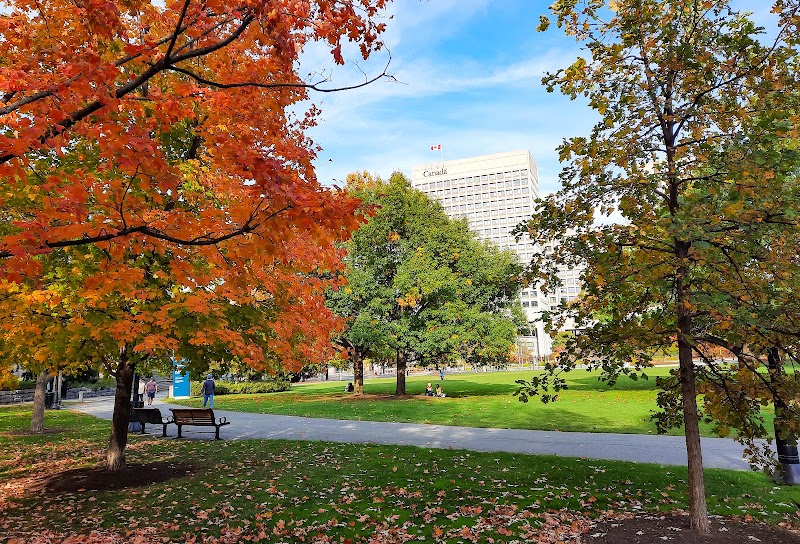
- The mature canopy — big old trees over a small lawn, which is precisely why office workers, festival crowds and tourists all end up here: it is the shadiest patch of ground in the government district.
What you’ll find
The layout is simple and deliberate. Paths cross the lawn diagonally, the fountain anchors the centre, and the monuments are spaced so that each gets its own pocket of quiet rather than competing. The Rideau Canal — a UNESCO World Heritage Site since 2007 — runs along one flank, Parliament Hill and the government precinct sit a few minutes away on foot, and the park works as the natural pause between them. The National Capital Commission maintains it as one of the capital’s official parks, so the horticulture and the memorial upkeep are of a standard you would expect of a state venue.
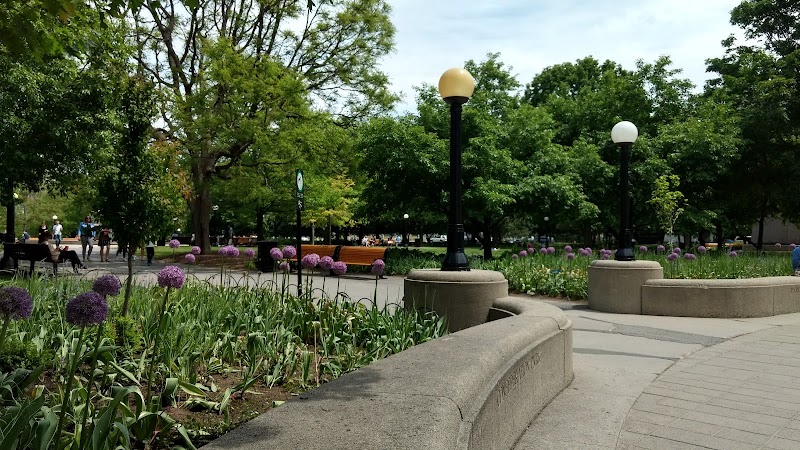
- Open lawn with crossing paved paths, level and step-free throughout.
- Five major national monuments and memorials, each with interpretive plaques.
- The historic Colonel By memorial fountain, running through the warm months.
- A commemorative plaque to the Polish Home Army, first erected in 1964, with a replica of the Polish decoration added in 1993.
- Benches under mature shade trees, and an NCC bistro operating in the park through the summer.
- Festival infrastructure — power, staging areas and open ground sized for a main stage and a standing crowd.
Things to do — and who it’s for
- Music fans — the Ottawa International Jazz Festival has put its main stage here for close to four decades, turning the lawn into a downtown concert bowl every summer.
- History and remembrance visitors — five memorials in one small square give a compressed, honest reading of who Canada sends to war and who it has been slow to thank.
- Office workers and downtown residents — the shadiest, quietest lunch spot in the government district, and the reason the benches fill at noon.
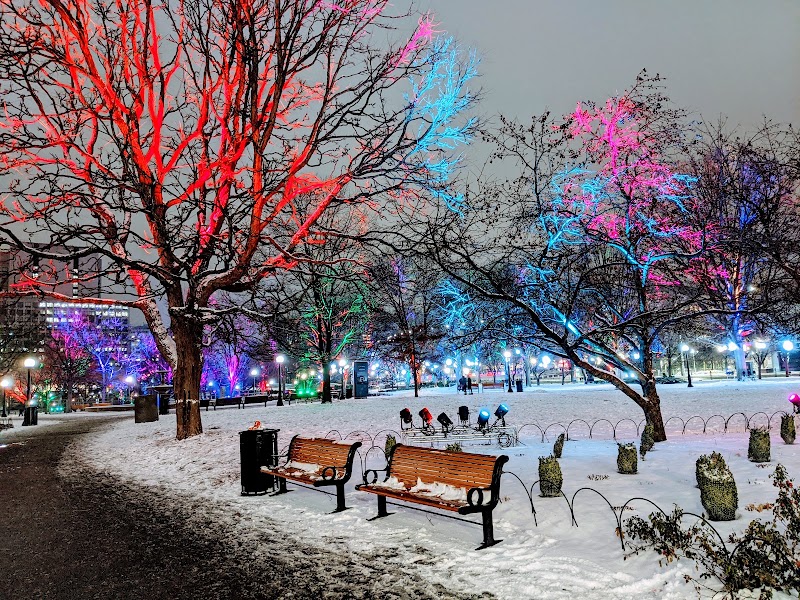
- Winter festival crowds — Winterlude brings ice-carving competition work into the park in February, so the same lawn that hosted jazz in July becomes a gallery of ice.
- Walkers and canal strollers — the park slots neatly into a route linking Parliament Hill, the canal locks and the Rideau Canal pathway.
- Photographers — the totem pole against downtown towers, and the fountain with autumn canopy behind it, are two of the more reliable compositions in central Ottawa.
Getting there & practical
Confederation Park sits in the downtown core on the western bank of the Rideau Canal, roughly midway between Parliament Hill and the university district. By transit it is straightforward: Parliament station on O-Train Line 1, the Confederation Line, is a short walk, and Rideau station on the same line is only marginally further on the other side. Many OC Transpo downtown bus routes pass within a couple of minutes, and during the jazz festival transit is by far the least painful way in. Entry is free at all times — this is a public capital park with no gate and no admission — and the paths are open year-round, day and night, apart from occasional closures when a ticketed festival fences off part of the lawn. Central paid parking exists nearby but is expensive and scarce during events. Allow twenty to thirty minutes to walk the monuments properly, or a full evening if you are coming for a concert.
When to visit
Spring arrives late and fast; by May the canopy is out, the fountain is running again, and the lawn dries out enough to sit on. Summer is the park’s loudest and best season — long light until well past nine, the bistro open, and the jazz festival taking over the grounds for ten days in late June and early July, with Canada Day celebrations filling the surrounding downtown on 1 July. Autumn is when the park looks its best and is least crowded: the mature trees turn hard yellow and copper over grey monuments, and the canal traffic winds down. Winter is not an off-season here, because in Ottawa winter is a programme rather than a pause — Winterlude in February brings ice-sculpture competition into the park, the Rideau Canal Skateway runs along the edge of it when conditions allow, and the memorials under snow have a stillness the summer crowds never let you see. Cold is real: January routinely sits around minus fifteen to minus twenty, so dress for it and the winter visit is the memorable one.
Good to know
Nothing about this ground is accidental. From 1908 to 1927 it held The Arena, home rink of the original Ottawa Senators, one of the founding clubs of the National Hockey League; the building was demolished in 1927. Part of the site was later occupied by the Roxborough Apartments, where prime ministers Mackenzie King and Louis St. Laurent both lived. The 1949 Greber Plan, the master plan that reshaped the capital, designated the block as the future “Confederation Park”, and in 1965 the federal government expropriated the remaining buildings, initially intending a national science museum. That plan was dropped and the site was finished as parkland instead, opening in 1967 for Canada’s centennial — which is where the name comes from. The monuments arrived over the following half-century: the South African War Memorial had already been unveiled in 1905 and was later relocated here, the totem pole came from British Columbia in 1971, the Polish Home Army plaque dates to 1964, the National Aboriginal Veterans Monument was unveiled in 2001, and the Animals in War Memorial was dedicated in 2012. The park has also hosted the city’s politics: in October 2011 it became the base camp of the Occupy Ottawa movement, which drew some five hundred people to its first march.
Visitor tips
- Read the plaques in order of date rather than by geography — 1905, 1964, 1971, 2001, 2012 — and the park turns into a timeline of who Canada chose to commemorate, and when.
- If you are coming for the jazz festival, arrive early and take the O-Train; the lawn is small, good sightlines go fast, and parking within walking distance effectively disappears.
- Come at lunchtime on a weekday in summer for the fountain and the shade, and at dusk in February for the ice sculptures — the same 2.63 hectares behave like two different parks.
Questions & answers
Is Confederation Park free? Yes. It is a public capital park maintained by the National Capital Commission, open at all hours with no admission charge. Some festivals held on the grounds are ticketed and may fence part of the lawn, but access to the park itself is free.
Where did the fountain come from? From Trafalgar Square in London. Designed by Sir Charles Barry in Peterhead granite, it played there from 1845 until the late 1930s, when it was removed to make way for larger fountains. Canada received the pair as a gift; this one was made a memorial to Lieutenant-Colonel John By, and its twin stands in Wascana Park in Regina.
What does the totem pole represent? It was carved in Victoria by Henry Hunt of the Kwakwaka’wakw and donated by British Columbia in 1971, marking a century since the province joined Confederation on 20 July 1871. The twenty-metre pole carries six crest figures: raven, man, grizzly bear, cannibal woman, killer whale and beaver.
Which festivals take place here? The Ottawa International Jazz Festival has staged its main stage in the park for close to forty years, Winterlude brings ice-carving into it each February, and the park forms part of the downtown Canada Day footprint on 1 July.
Why is it called Confederation Park? Because it opened in 1967, the centennial of Canadian Confederation. The name had been assigned to the block eighteen years earlier by the 1949 Greber Plan for the capital region.
How do I get there on the O-Train? Take Line 1, the Confederation Line, to Parliament station and walk a few minutes east; Rideau station on the same line is an equally workable approach from the other direction.
Is there anything to do here in winter? Yes. Winterlude activity, including ice-sculpture competition work, comes into the park in February, and the Rideau Canal Skateway runs along the park’s flank when ice conditions permit. Expect serious cold and dress accordingly.
How long does a visit take? Twenty to thirty minutes is enough to walk all five memorials and read the plaques. If you are attending a concert, budget the evening, and if you are combining the park with Parliament Hill and the canal locks, allow half a day.
Photos
Show 1 more photos
Visitor reviews
Reviews last updated: 2026-08-04 20:17:45
Data is refreshed monthly. Sources: ottawa.name and editorial picks based on reviews.
A nice, clean park for walking. You can sit and rest on one of the benches or by the fountain. A good place for a picnic. You can have something to eat or drink at the NCC bistro located in the park.
One of the tourist parks in the very heart of Ottawa. As the name suggests, it's dedicated to the creation of the Canadian Confederation. This open-air recreational complex is popular with tourists and locals alike. Ther…
I've lived through many wonderful moments in this park: from listening to jazz festival concerts to celebrating the finish of a half-marathon and taking part in Canada Day celebrations. A beautiful part of downtown.
Confederation Park is an urban green space with wonderful views of the surrounding buildings, a few trees that provide shade on a hot day, and plenty of benches where you can rest after a walk through downtown. A totem p…
A great place to read a book or walk your dog on a sunny day!
There are several benches around the park where you can sit and enjoy lunch. If you work in the financial district, this could be your favourite place in the…