

Park · Ottawa · ⭐ 9.5/10 · 3403 reviews · updated: 2026-08-04 20:17:42
Address: 3127 Carling Ave, Nepean, ON K2H 5A6, Canada
Andrew Haydon Park — the west end’s waterfront lawn on Lac Deschênes
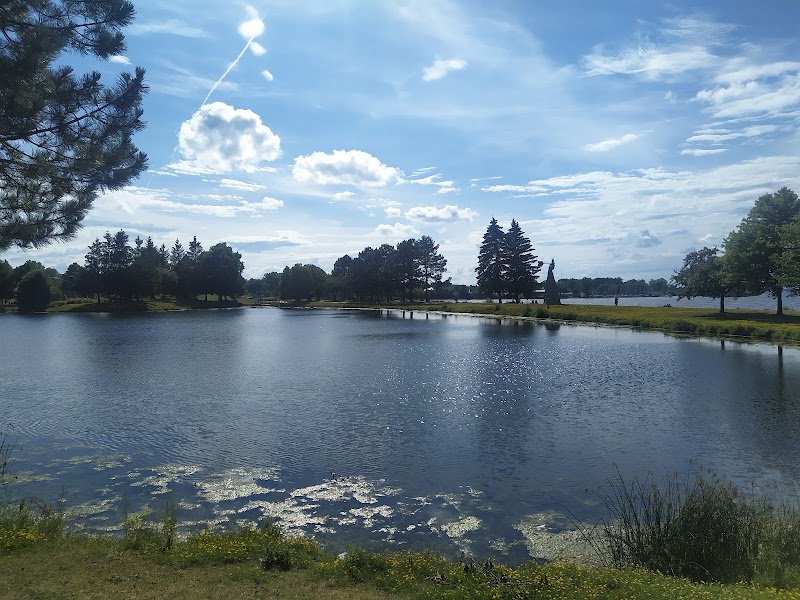
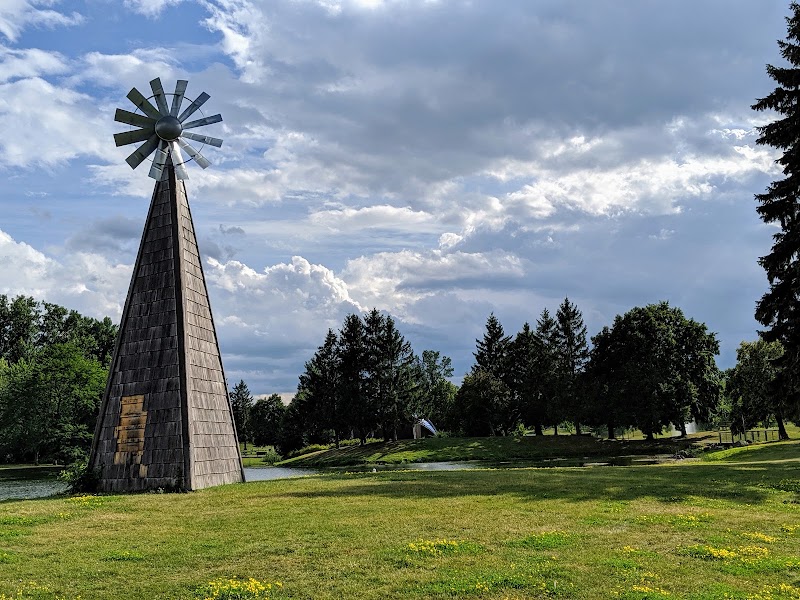
Andrew Haydon Park is the park Ottawa’s west end built for itself, and it shows in the layout: nothing here is wild, everything is arranged. Two ornamental ponds with fountains sit in mown lawns; a small artificial waterfall runs beside them; a bandshell faces a slope where people put out folding chairs on summer evenings; and beyond all of it the Ottawa River opens out into the wide reach called Lac Deschênes, with the Quebec shore on the far side and some of the best sunsets in the city. It is also, quietly, one of the most productive bird-watching sites in the National Capital Region, which is not something most picnickers realise while they are eating.
Highlights
- The two ornamental ponds — connected artificial basins with fountains, permanently occupied by Canada geese and mallards and ringed by a flat, stroller-friendly path.
- The bandshell — an outdoor performance shell with a natural grass slope for an audience, used for community concerts through the warm season.
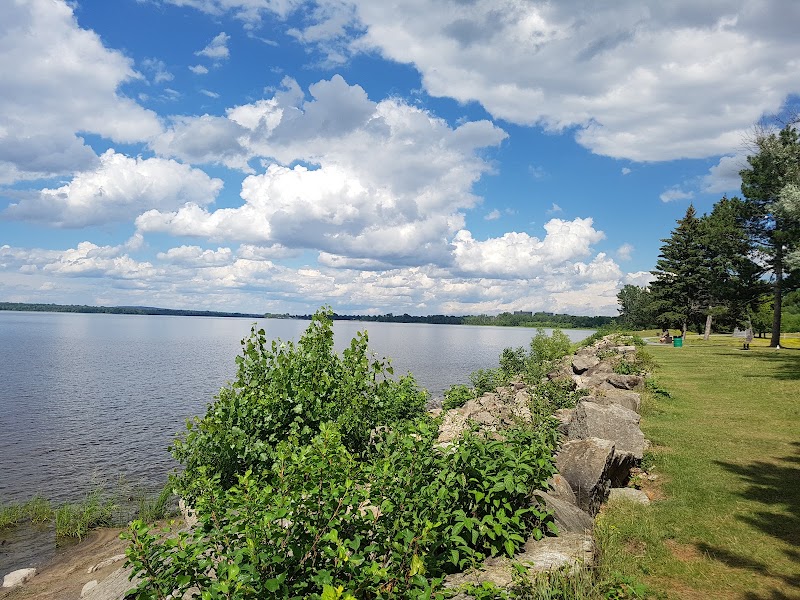
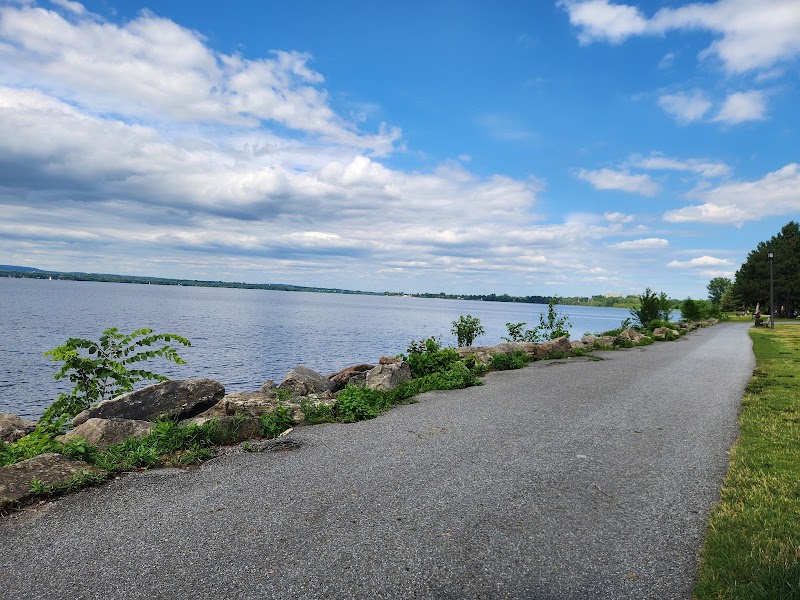
- The Lac Deschênes shoreline — a long open frontage on the widest stretch of the Ottawa River within the city, facing northwest for sunsets.
- The shorebird flats — when river levels drop in late summer, mud and shallow margins are exposed and the park becomes one of Ottawa’s top migration-watching sites.
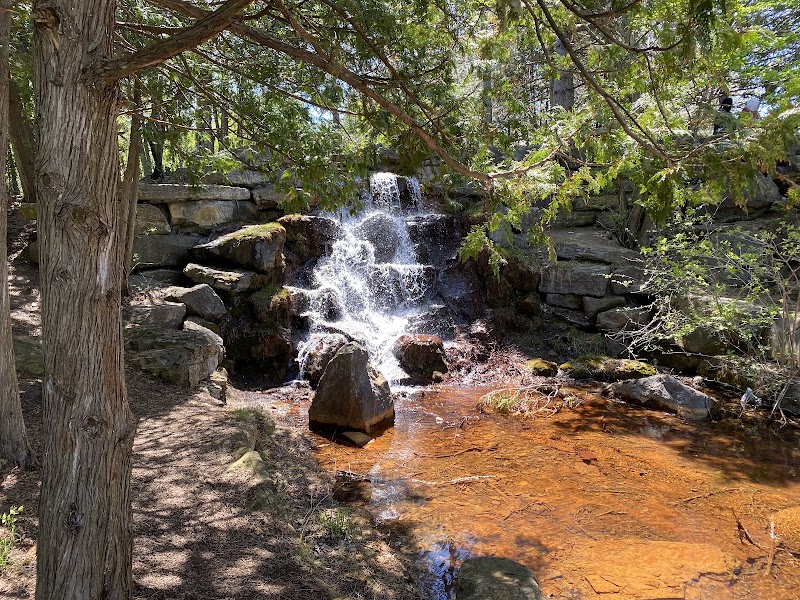
- The artificial waterfall and creek mouth — a landscaped cascade between the ponds, with Stillwater Creek entering a small marsh at the park’s western edge.
- Play structures and a splash pad — the family core of the park, set back from the water on level ground.
What you’ll find
The park reads as a long green ribbon between the road and the river, split by the ponds into an east side and a west side, each with its own parking, its own washrooms and its own character. The east half is the picnic and playground half; the west half is quieter, closer to the marsh, and the one birders head for.
- Two linked ponds with fountains, circled by paved level paths.
- A bandshell and an informal grass amphitheatre for summer concerts.
- Extensive picnic lawns with tables and shelters, popular for family gatherings.
- Children’s play structures and a seasonal splash pad.
- The Ottawa River multi-use pathway, which runs from here east through Britannia and Westboro to the Canadian War Museum downtown.
- Free parking on both sides of the park, and washroom facilities in season.
Things to do — and who it’s for
- Families with small children — the flat pond loop, the splash pad and the play structures make this one of the least stressful parks in the west end to bring a toddler to.
- Birders — late summer and autumn are exceptional here: waterfowl stage in the thousands, and Snow Geese and Cackling Geese turn up among the Canada Geese most years.
- Picnickers and large gatherings — the sheer amount of level mown grass, plus tables and shelters, makes it a default choice for extended-family afternoons.
- Cyclists — the park is the western anchor of the Ottawa River pathway, a genuinely uninterrupted ride into the downtown core.
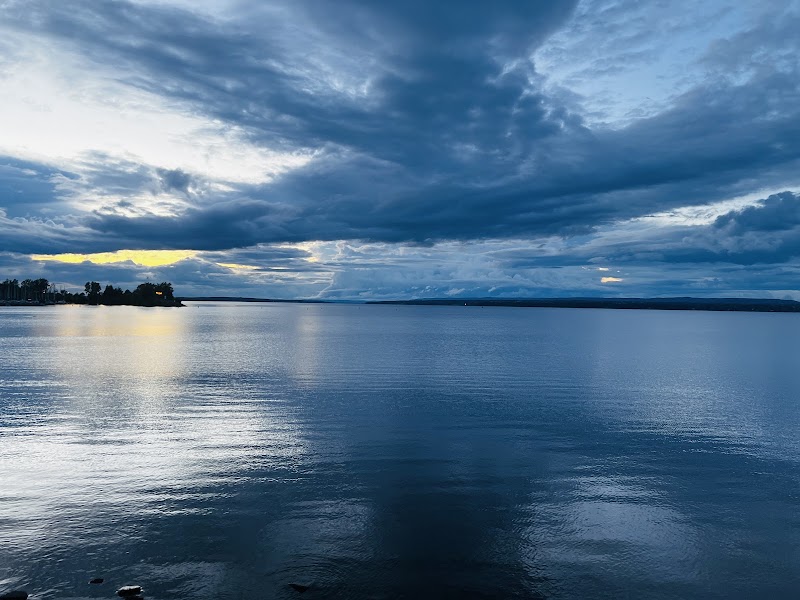
- Photographers and sunset-watchers — the open northwest-facing frontage on Lac Deschênes gives long, unobstructed evening light across the water.
- Dog owners — leashed dogs are welcome here, with the standing rule that they stay five metres clear of children’s play areas and water features.
Getting there & practical
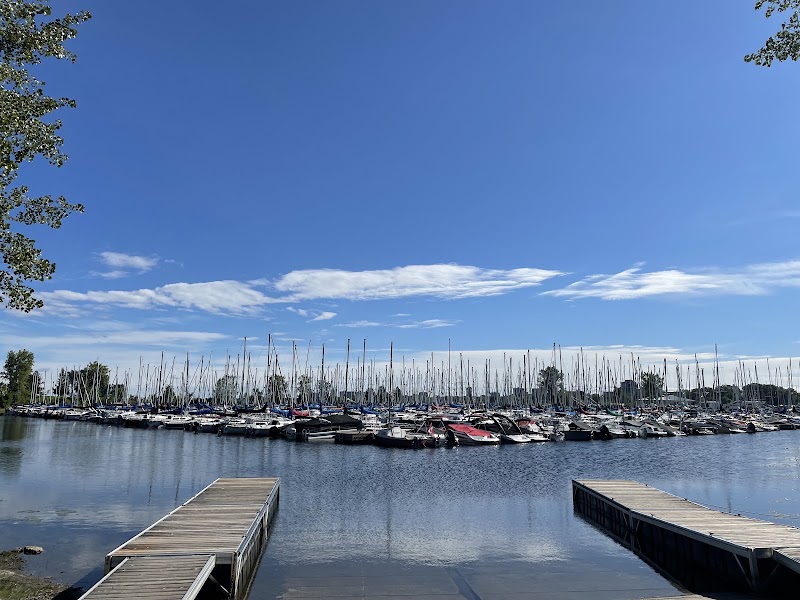
The park is in Ottawa’s west end, in the Nepean part of the city, between the Bayshore and Britannia areas and directly next to Dick Bell Park, where the Nepean Sailing Club keeps its marina. Public transit is by bus rather than rail for now: OC Transpo routes 58, 62, 85 and 88 stop at the park, and the Bayshore transit station is a short ride away and serves a much wider set of routes. The O-Train’s western extension is still under construction and not yet carrying passengers to this part of the city, so plan on the bus or the pathway. Entry to the park is free, parking is free, and there are lots on both the east and west sides. The grounds keep standard City of Ottawa park hours, open from early morning until late evening. An hour is enough for a walk around the ponds; a picnic or a birding session easily fills half a day.
When to visit
Spring brings the first big waterfowl movement up the Ottawa River, and the park’s open water and thawing margins fill with ducks and geese well before the lawns are usable. Summer is the social season — the splash pad running, the bandshell in use, the picnic tables claimed by mid-morning on weekends, and the sunsets stretching past nine o’clock. Autumn is the connoisseur’s period and the reason serious birders keep coming back: as river levels fall, mudflats and shallow margins are exposed, shorebirds drop in, and thousands of geese stage offshore, with rarer species mixed in among them. Winter in Ottawa is long and severe, and this park does not pretend otherwise — the ponds freeze solid, the fountains are shut down and the splash pad is closed, but the flat paths stay walkable, the river edge is spectacular in hard frost, and the open water further out holds wintering ducks. For skating, the great winter attraction is elsewhere in the city: the Rideau Canal Skateway, 7.8 kilometres of maintained ice between the Hartwells Locks near Carleton University and the locks below Parliament Hill, free and typically open from January into early March. Snowshoeing and cross-country skiing in this part of town are better pursued in the wooded conservation land a short distance east, around Mud Lake.
Good to know
This shoreline was very nearly private housing. In the early 1970s Andrew Scott Haydon — universally known as Andy Haydon — was Reeve of Nepean Township, a post he held from 1970 to 1978, and he pushed the township to buy the waterfront land and keep it out of the hands of developers. The park was built on it, laid out with the landscape architect Donald W. Graham, and renamed in Haydon’s honour in 1979. His own career went considerably further: he served six days as the first mayor of Nepean in November 1978, then thirteen years as Regional Chair of Ottawa-Carleton from 1978 to 1991, a period in which the region introduced the Transitway bus rapid transit network that eventually became the backbone the O-Train was built onto. Haydon died on 28 October 2024 at the age of 91, and two things in the city carry his name: this park, and Andrew Haydon Hall, the council chamber at Ottawa City Hall. The park’s ecology matters more than its size suggests. It sits on Lac Deschênes, the broad lake-like widening of the Ottawa River in the city’s west end, which forms part of a recognised Important Bird Area and lies squarely on a major migratory corridor — nearly a quarter of all bird species recorded at the park are ducks, geese and other waterfowl. Even the park’s dog policy is a piece of ecological management: dogs were banned outright at first, then admitted on a pilot basis in 2009 specifically to disperse an overpopulation of resident Canada geese, and the pilot was made permanent with the condition that leashed dogs keep five metres away from play areas and water features. Immediately west, Stillwater Creek enters a small marsh, and immediately east, Dick Bell Park and the Nepean Sailing Club fill the shoreline with masts from spring to autumn.
Visitor tips
- There is no supervised swimming here. Ottawa’s four lifeguarded beaches are elsewhere — the nearest is Britannia, a short distance east along the same shoreline — and even those are subject to seasonal water-quality closures, since the city posts advisories when bacterial testing exceeds provincial limits after heavy rain.
- For birds, come in the last weeks of August and through September, bring binoculars, and work the western half of the park where the marsh and the exposed flats are. Early morning light is behind you looking out at the water.
- If you want the sunset, park on the west side and walk out to the open shoreline about forty minutes before the sun goes down; the view across Lac Deschênes is unobstructed all the way to the Quebec shore.
Questions & answers
Is Andrew Haydon Park free? Yes, entirely. There is no admission charge to the park and no charge for the parking lots on either side of it.
Can you swim at Andrew Haydon Park? There is no supervised beach here and swimming is not the point of the park. The nearest lifeguarded beach is Britannia, a short distance east along the Ottawa River, and swimming at all of the city’s river beaches is subject to seasonal water-quality closures — the health authority tests weekly and posts advisories when results exceed the provincial standard, most often after heavy rain.
What makes it good for birdwatching? The park sits on Lac Deschênes, part of a recognised Important Bird Area on a major migration corridor. When river levels drop in late summer, mudflats and shallow margins appear and shorebirds move in, while thousands of geese and ducks stage offshore in autumn — occasionally including Snow Geese and Cackling Geese among the Canada Geese.
How do I get there by public transport? By bus. OC Transpo routes 58, 62, 85 and 88 serve the park, and Bayshore station connects to many more. The O-Train does not yet reach this part of the west end; its western extension is still in construction and testing.
Are dogs allowed? Yes, on a leash. Dogs were originally banned, then permitted from 2009 as a way of dispersing an overpopulation of resident Canada geese, and the permission was made permanent on the condition that leashed dogs stay five metres clear of children’s play areas and water features.
Who was Andrew Haydon? Andy Haydon was an engineer and politician who served as Reeve of Nepean Township from 1970 to 1978 and then as Regional Chair of Ottawa-Carleton from 1978 to 1991. He drove the purchase of this waterfront land in the early 1970s to keep it public; the park was renamed for him in 1979. He died in October 2024 at 91.
Is there anything to do here in winter? The ponds freeze, the fountains and splash pad shut down, and the park becomes a walking and photography destination rather than an active one. The city’s marquee winter attraction, the Rideau Canal Skateway, is downtown; the best snowshoe and ski terrain nearby is the conservation woodland around Mud Lake to the east.
Is it suitable for a large family picnic? It is one of the best options in the west end for exactly that — extensive level lawns, picnic tables and shelters, washrooms in season, free parking on both sides, and a playground and splash pad to keep children occupied within sight of the tables.
Photos
Show 1 more photos
Visitor reviews
Reviews last updated: 2026-08-04 20:17:42
Data is refreshed monthly. Sources: ottawa.name and editorial picks based on reviews.
Lovely, nice, relaxing, beautiful, peaceful, wonderful, charming place. for families, romantic couples, lonely walkers, yacht club members… busy on a weekend evening, yet a lot of parking places at several parking lots a…
A great place for walks, fun with family and friends, and beautiful views. A wonderful sunset. It's an amazing place for a walk with free parking, so it's always busy. It's hard to find parking spaces. The water lantern…
A great park, especially in winter and especially for someone who loves cross country ski. Wonderful views guaranteed
A nice and picturesque waterfront park, great for walking, cycling or a picnic. The landscaping and the walking paths along the river are wonderfully designed. Around the park's two ponds live plenty of geese and mallard…
Such an amazing park with views! The best place for bike rides, hikes, a picnic and a barbecue! There are playgrounds and public washrooms. It was my first time there, at a festival, but definitely not my last. The sunse…