

Park · Ottawa · ⭐ 9.1/10 · 3091 reviews · updated: 2026-08-04 20:17:43
Address: 2805 Carling Ave, Ottawa, ON K2B 8K6, Canada
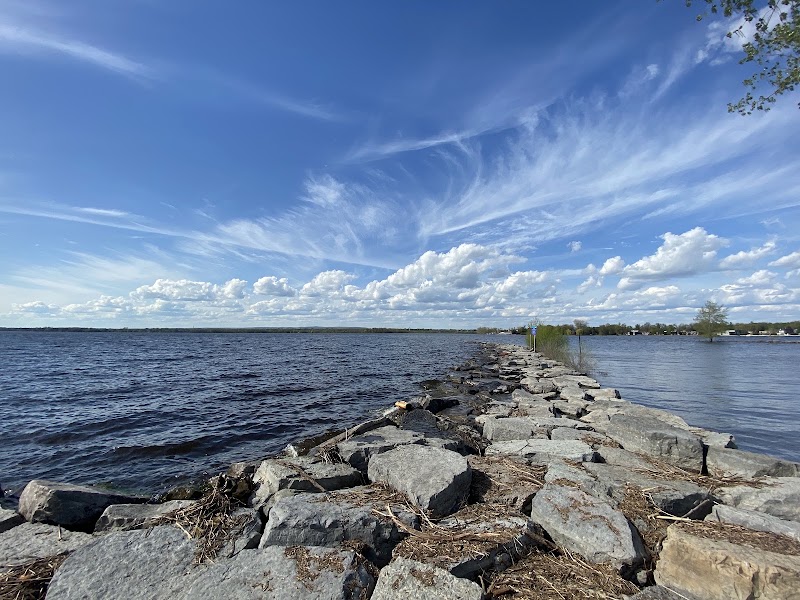
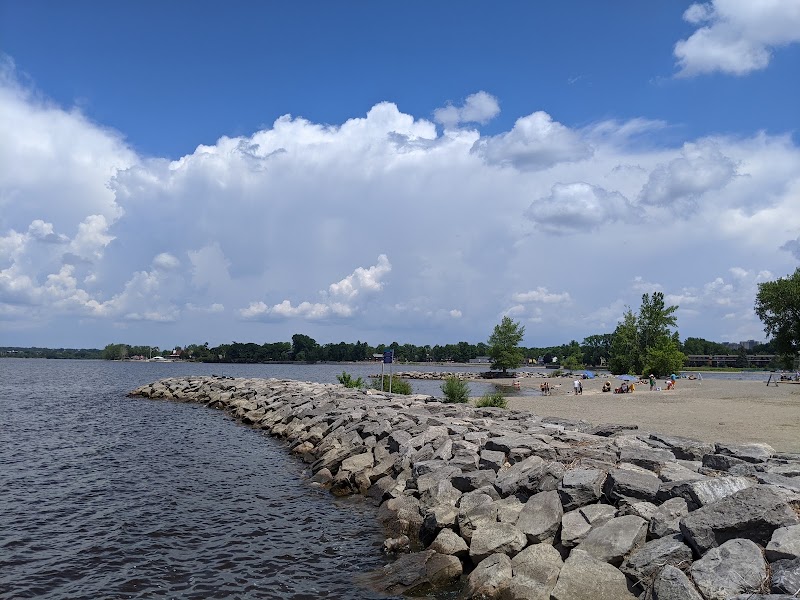
Britannia Park and Beach — a city beach with a wilderness attached
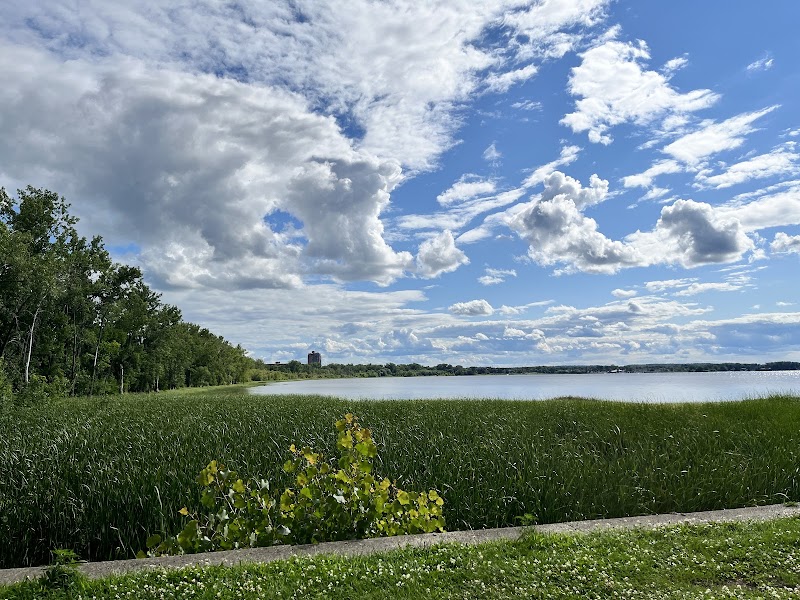
Britannia is the rare urban park where you can go swimming, watch a world-class standing wave and walk into old-growth pine forest inside the same hour. It occupies a peninsula in Ottawa’s west end where the river broadens into Lac Deschênes, and it comes in two halves that could not be less alike: an open, sandy, deliberately social beach park with a splash pad and barbecue pits, and — right behind it — the Britannia Conservation Area, a wooded wetland around Mud Lake that ranks among the most heavily birded urban sites in Canada. The transition between them takes about ninety seconds on foot.
Highlights
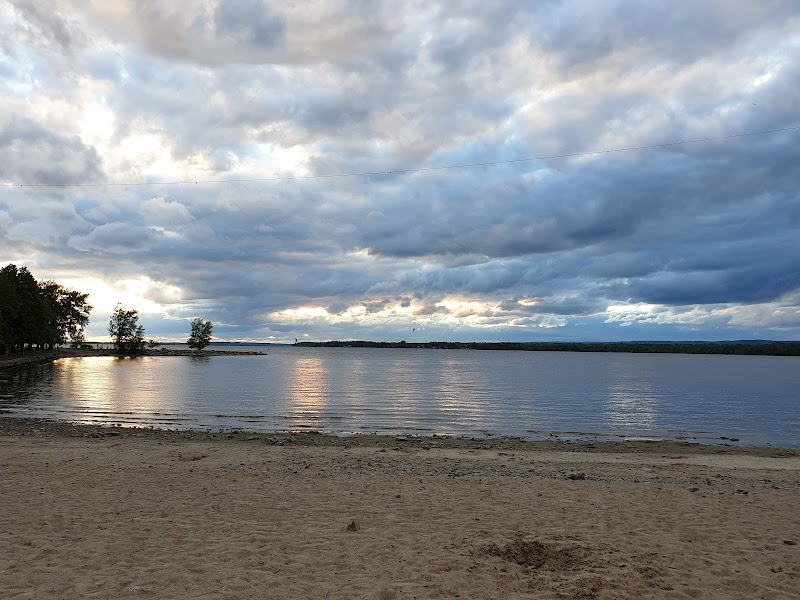
- Britannia Beach — one of only four lifeguarded beaches in Ottawa, staffed daily from noon to 7 p.m. in summer, and historically the city beach with the lowest bacterial counts and the fewest advisory days.
- Mud Lake and the Britannia Conservation Area — roughly 79 hectares of forest and wetland by the City’s reckoning, with three to five kilometres of trails, boardwalks and lookouts.
- 269 recorded bird species — the tally the National Capital Commission gives for Mud Lake, on a major migratory corridor within the Lac Deschênes–Ottawa River Important Bird Area.
- The Deschênes Rapids offshore — a standing wave that draws freestyle kayakers and river surfers from around the world, and the run used by guided rafting trips that launch from the beach.
- Ron Kolbus Lakeside Centre — the park’s indoor anchor, with a banquet hall for about 300 people, licensed patios and a long tradition of big-band dances.
- Old-growth pine — mature stands of oak and pine along the lake and river edges, unusual to find intact this close to a beach parking lot.
What you’ll find
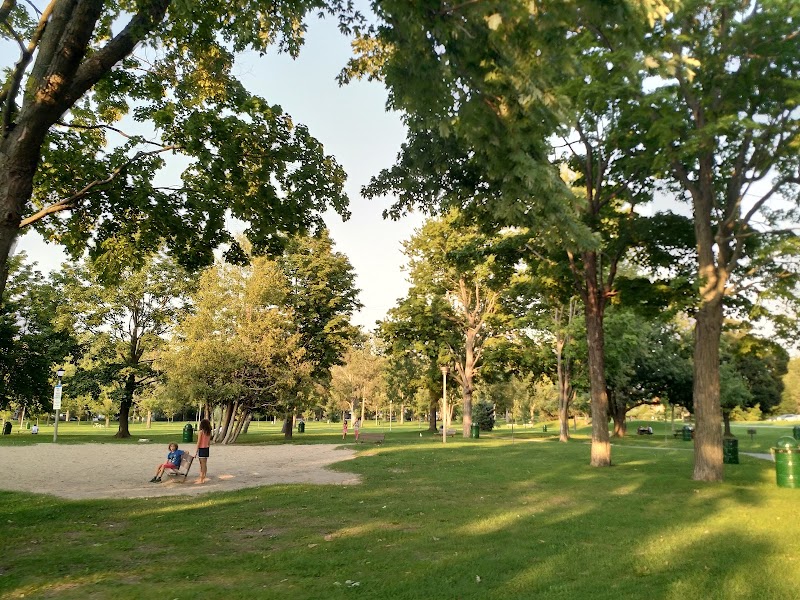
The park is organised around the water and the woods, with the built facilities squeezed between them. The beach itself is broad and shallow-shelving; behind it are lawns, tables and shelters; behind those the trails begin and the noise stops almost immediately.
- A supervised sand beach with change facilities, washrooms and seasonal volleyball net rental.
- Picnic grounds with tables and barbecue pits, plus play structures and a splash pad.
- The Ron Kolbus Lakeside Centre, used for functions, community programmes and dances.
- The conservation area’s trail network, with boardwalk sections and viewpoints over Mud Lake and the river.
- The Ottawa River multi-use pathway, running east through Westboro to the Canadian War Museum and west to Andrew Haydon Park.
- Free parking and washrooms serving both the beach and the conservation trails.
Things to do — and who it’s for
- Swimmers and beach families — the most reliable of the city’s four supervised beaches, with lifeguards, shallow water and everything a family needs within sight of the sand.
- Birders — Mud Lake is one of the best-known urban birding sites in the country; spring and autumn migration are the peak, but the site produces year-round.
- Walkers and nature photographers — three to five kilometres of easy trails through deciduous swamp forest, boardwalk and mature oak and pine.
- Whitewater paddlers and river surfers — the Deschênes Rapids offshore hold a permanent standing wave, strongest in spring, and guided rafting trips put in from here.
- Cyclists — the park is a major node on the Ottawa River pathway, with continuous riding in both directions.
- Event organisers — the Lakeside Centre handles roughly 300 guests with licensed patio space, which is rare for a park facility.
Getting there & practical
The park is in Britannia Village, a small peninsula neighbourhood at the western edge of the city, next to the Bayshore area and about a quarter of an hour from downtown by car. Transit is by bus: the City lists OC Transpo route 16 as the service for the conservation area, and Bayshore transit station nearby connects to a much larger set of routes. The O-Train does not reach this part of the west end yet — the western extension is still in construction and testing — so plan on the bus, a bike along the river pathway, or a car. There is no admission charge for the park, the beach or the conservation area, and parking is free. The beach operates on the summer swim season with lifeguards on duty daily from noon to 7 p.m.; the trails are open year-round in daylight. Allow half a day if you intend to do both halves properly.
When to visit
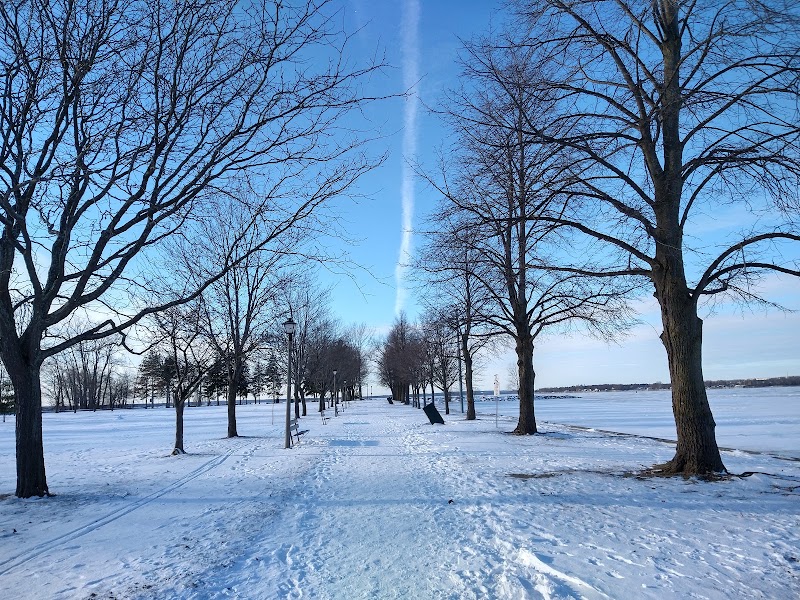
Spring is the paddlers’ and birders’ season simultaneously: meltwater builds the standing wave in the Deschênes Rapids to its most powerful, and migration pushes warblers, thrushes and waterfowl through Mud Lake in numbers. Summer is beach season proper — lifeguards on duty, the splash pad running, barbecue pits in use, and the water warm enough to stay in. Autumn belongs to the woods: the swamp forest colours up, the crowds vanish from the trails, and the second migration wave comes through. Winter in Ottawa is severe and long, and Britannia handles it better than most city parks because the conservation area stays walkable — packed snow on the main trails makes for excellent snowshoeing, and the mixed woods are one of the most reliable places in the city to see wintering chickadees, woodpeckers and owls in hard frost. Note that the National Capital Commission asks visitors to stay off ice-covered water entirely, and to keep to the marked trails. For skating, the city’s set piece is across town: the Rideau Canal Skateway, 7.8 kilometres of maintained ice between the Hartwells Locks near Carleton University and the locks below Parliament Hill, free of charge and generally open from January into early March.
Good to know
Britannia was a resort before it was a suburb. Captain John LeBreton put a flour mill and then a lumber mill here in 1826 — before Ottawa itself existed as a town — and by 1860 the operation was cutting up to 100,000 boards a year. When the mills wound down, the owner John Jamieson converted the buildings into summer rental cottages with boat storage underneath, and from 1887 the peninsula lived off holidaymakers. The park in its modern form dates from 1900, and its origin is pure commerce: the Ottawa Electric Railway Company created it that year to give people a reason to ride the new streetcar line out from downtown. The company’s amusement park here was compared in its day to Coney Island, and the Britannia Pier, also built in 1900, ran roughly 1,450 feet into the river, lit with electric lamps and founded on boulders salvaged from a failed hydroelectric scheme by the Metropolitan Electric company. Those same abandoned concrete ruins still stand in the current offshore, which is part of why the Deschênes Rapids break the way they do. Between 1950 and 1969 the Britannia Yacht Club turned the derelict Metropolitan Electric canal into two of the best-sheltered harbours in North America. The village was annexed to Ottawa in 1950 and today holds only about 610 residents in some 270 households, with 31 buildings recognised for heritage value. Mud Lake, meanwhile, is younger than the park by six decades: it was cut off from a bay of the Ottawa River in the early 1960s when the Britannia water purification plant was built, a facility that entered service in 1961 and is rated at 360 million litres a day. What was left behind became a large nutrient-rich pond ringed by deciduous swamp forest and mature oak and pine. The National Capital Commission counts 269 bird species and 44 rare plant species there, and has run a vegetation management programme since autumn 2015 against invasive Norway maple, garlic mustard and buckthorn, which threaten roughly 29 percent of the site.
Visitor tips
- Swimming here is genuinely subject to seasonal water-quality closures. Ottawa Public Health samples the supervised beaches weekly, and a result above the provincial standard of 200 E. coli per 100 millilitres means an advisory against swimming. Britannia has the best long-term record of the city’s four beaches, but check the posted status after heavy rain before you commit.
- Treat the conservation area as a nature reserve, not a park extension: the National Capital Commission prohibits pets and cycling on the Mud Lake trails, asks visitors to stay on the marked routes, and asks that animals not be fed — the local tradition of hand-feeding chickadees is discouraged for the birds’ own health.
- Do the two halves in the right order on a hot day: trails first thing in the morning when the birds are active and the woods are cool, beach in the afternoon when the sand has warmed and the lifeguards are on.
Questions & answers
Is Britannia Park free to visit? Yes. The park, the beach and the conservation area are all free, and parking is free as well.
Can you swim at Britannia Beach? Yes — it is one of the four beaches in Ottawa with lifeguards, on duty daily from noon to 7 p.m. through the summer season. Swimming is subject to seasonal water-quality closures: the health authority samples weekly and posts an advisory when bacteria exceed the provincial limit, most often after heavy rainfall. Britannia is historically the least frequently affected of the city’s beaches.
What is Mud Lake? A large nutrient-rich pond at the heart of the Britannia Conservation Area, formed in the early 1960s when a bay of the Ottawa River was cut off by construction of the Britannia water purification plant, which began operating in 1961. It is now one of the most popular urban birding sites in Canada, with 269 recorded bird species.
Can I bring my dog on the Mud Lake trails? No. The National Capital Commission bans pets in the Mud Lake area, along with cycling, and asks visitors to keep to official trails and not to feed the wildlife. Dogs are a different matter in the open beach park, where standard city park rules apply.
How do I get there without a car? By bus — the City lists OC Transpo route 16 as serving the conservation area, and Bayshore station nearby links to many more routes. The riverside multi-use pathway also runs directly here from downtown, which makes cycling a genuinely practical option. The O-Train’s western extension has not opened to passengers in this part of the city.
Is there whitewater here? Yes, offshore. The Deschênes Rapids carry a permanent standing wave that attracts freestyle kayakers and river surfers internationally, strongest in spring, and guided rafting trips launch from the beach area. This is not something to attempt casually — the rapids run past the concrete ruins of an abandoned hydroelectric project.
What can I book for a group? The Ron Kolbus Lakeside Centre inside the park has a banquet hall for around 300 people, licensed patio space and smaller meeting rooms, and has long hosted community events and big-band dances.
How long does a full visit take? An hour covers the beach or a short trail loop. Half a day is realistic if you want both — the conservation area trails run three to five kilometres with boardwalks and lookouts, and the beach is worth a proper afternoon in July and August.
Photos
Show 1 more photos
Visitor reviews
Reviews last updated: 2026-08-04 20:17:43
Data is refreshed monthly. Sources: ottawa.name and editorial picks based on reviews.
The moment you arrive, you're met by the serene beauty of the water, wide views and a relaxing atmosphere that puts you at ease right away. The beach itself is spacious, with plenty of soft sand where you can spread out…
A wonderful, large park and beach located in Britannia. This beach park has quite a few amenities: 2 large baseball fields, a basketball court, a wading pool, a playground, a beach, a walking path, and spacious areas for…
A great beach with two play structures. Lots of clean public washrooms. A swimming area in the river. Lifeguards are on duty in certain months from 11:00 to 19:00. There's also a place where you can grab a bite. There ar…
A great place for fun with family and friends. The picturesque beauty while walking or simply enjoying the sand and water is just exotic. The water isn't that deep, so children who can't swim can enjoy it comfortably. A…
This park in Ottawa is a great place to relax with family. It's quiet, convenient for a family outing and perfectly suited for a picnic on the waterfront. The small beach area is a nice addition, and the volleyball court…