

Park · Ottawa · ⭐ 9.3/10 · 2946 reviews · updated: 2026-08-04 20:17:43
Address: Preston Street and, Queen Elizabeth Driveway, Ottawa, ON K1S 4N7, Canada
Commissioners Park — the tulip park on the shore of Dow’s Lake
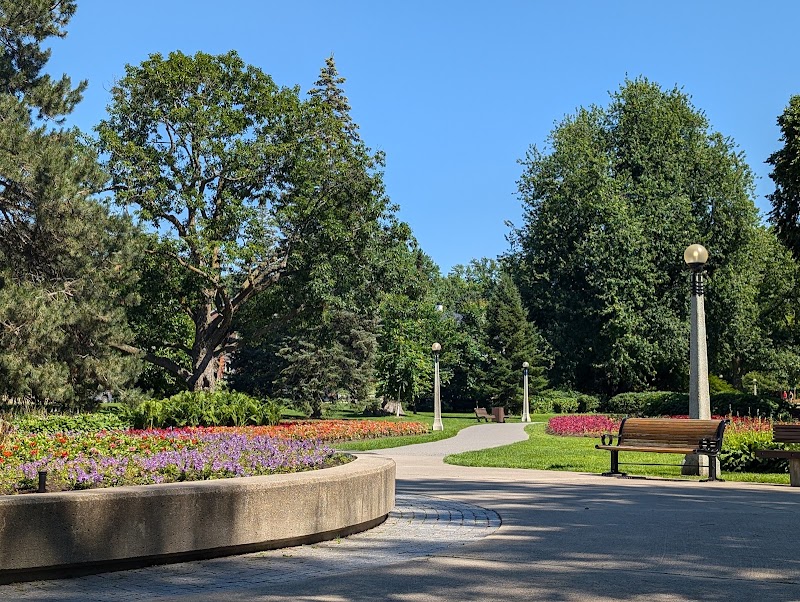
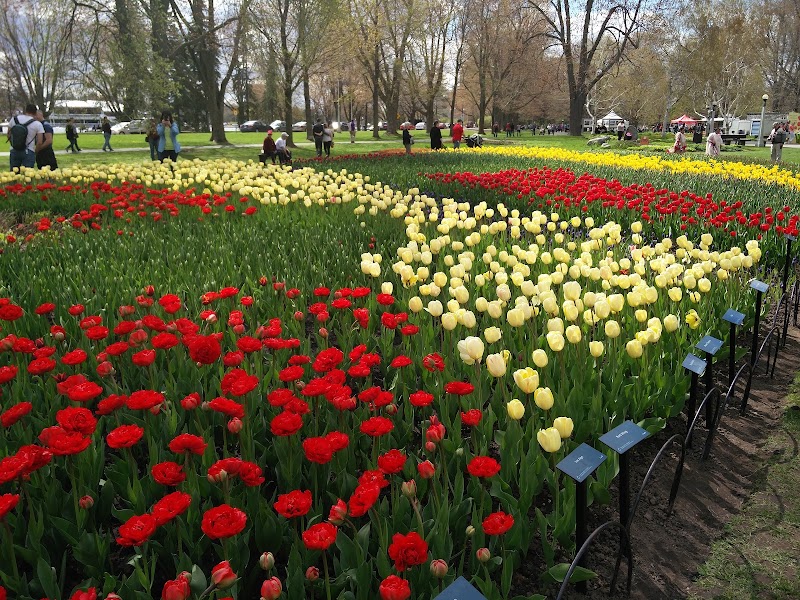
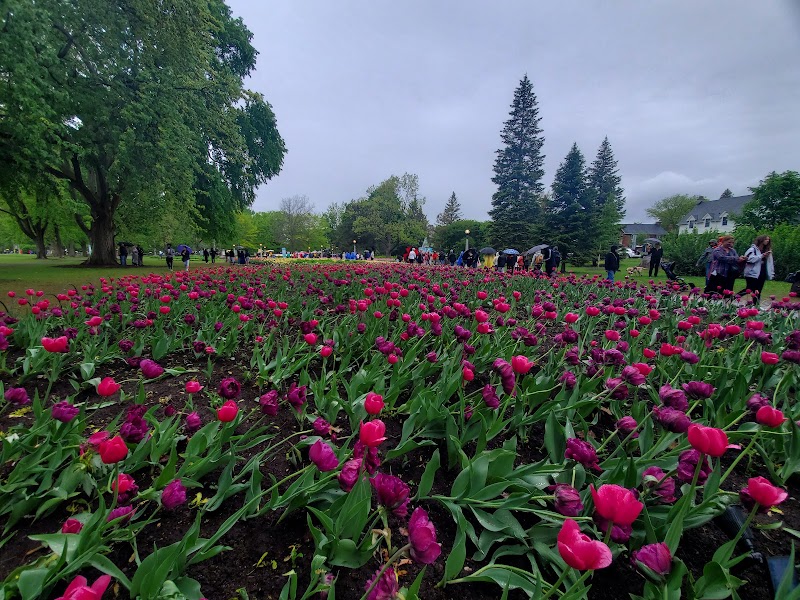
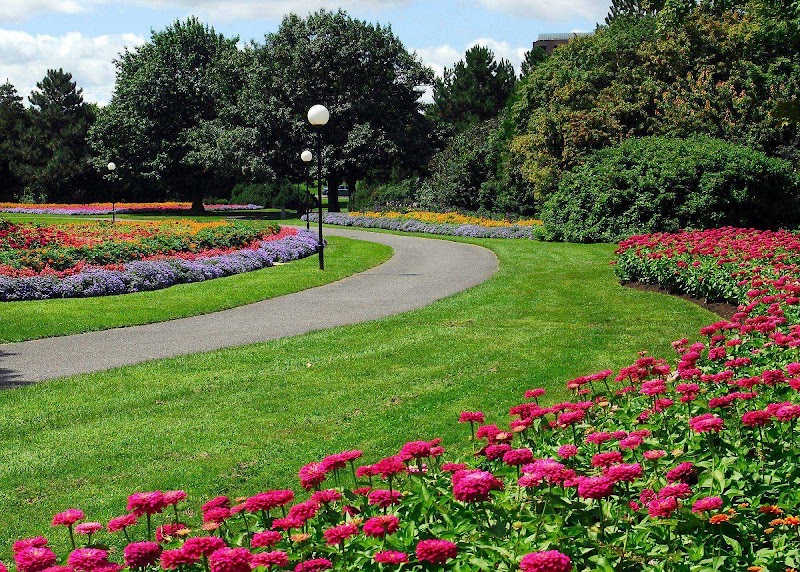
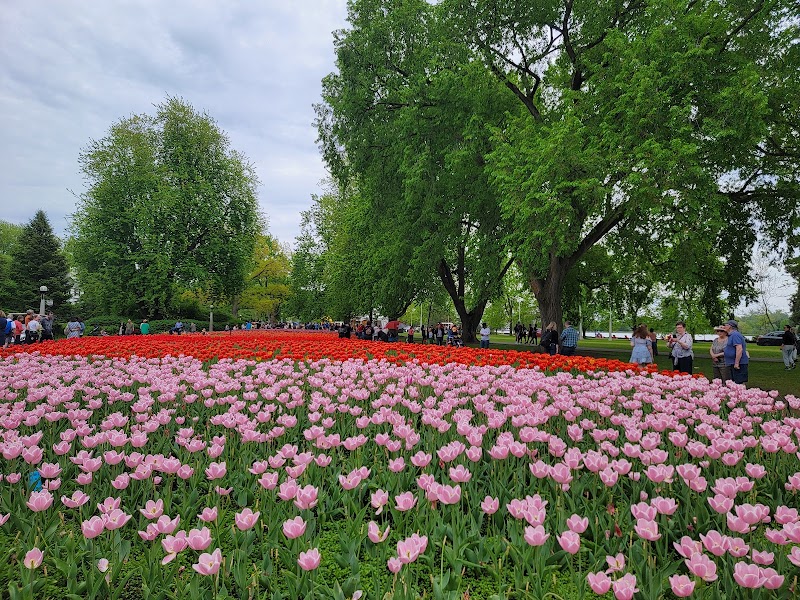
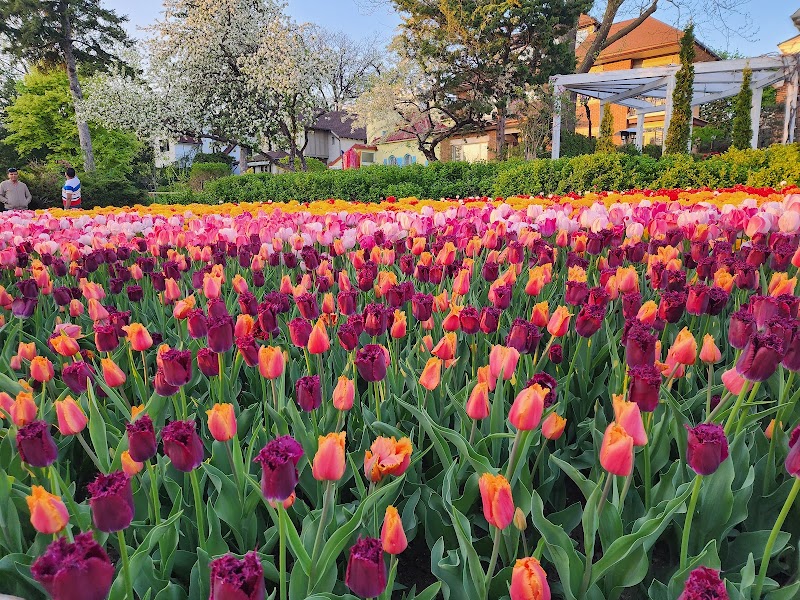
For eleven months of the year Commissioners Park is a pleasant 8.95-hectare lawn with mature trees, winding paved paths and a long frontage on Dow’s Lake. For about three weeks in May it becomes the single most photographed patch of ground in the capital, because this is where the National Capital Commission plants the largest concentration of tulips in the region — as many as 300,000 bulbs, in over a hundred varieties, laid out in beds along the water. The flowers are not decoration. They are the visible end of a wartime debt between Canada and the Netherlands that the city has been repaying in bulbs every spring since 1945.
Highlights
- The tulip beds — up to 300,000 bulbs in more than a hundred varieties, the highest concentration anywhere in the region and the National Capital Commission’s flagship display.
- The Canadian Tulip Festival — the May festival that grew out of the Dutch royal family’s 1945 gift, with this park as its principal viewing ground.
- “Man with Two Hats” — the sculpture by the Dutch artist Henk Visch, unveiled by Princess Margriet in May 2002, with an identical work standing in Apeldoorn in the Netherlands.
- The Dow’s Lake frontage — open water views across a lake that holds close to thirty fish species, among them pike, walleye, bass and muskellunge.
- The Rideau Canal Skateway — in winter the lake is one of the main hubs of the world’s largest skating rink, with the pavilion’s rental operation and heated change rooms on the far shore.
- Accessible paved paths — level, surfaced walkways suitable for wheelchairs and strollers throughout, which is not universal in Ottawa’s older parks.
What you’ll find
The park is a long, gently shaped green wedge between the residential streets of the Glebe and the water, with the Dominion Arboretum across the lake to the west and Carleton University off to the south. There is no admission point, no fence and no obvious centre — you simply walk in from whichever side you arrive on.
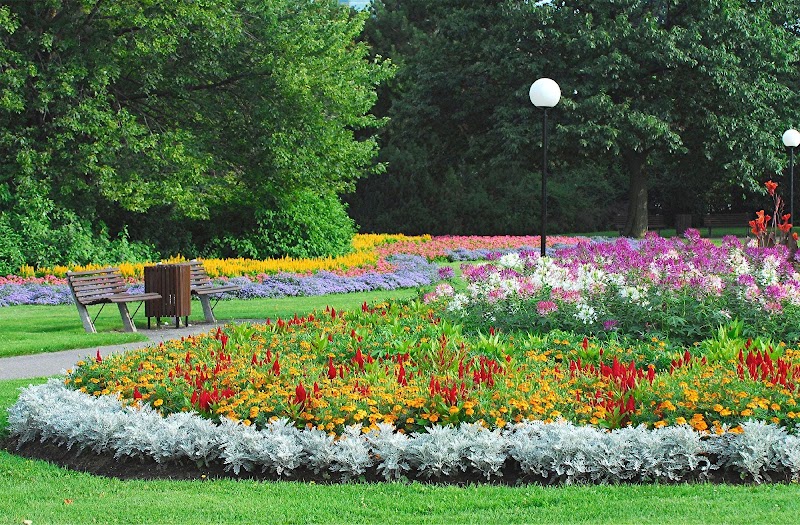
- Formal tulip beds in spring, replanted with summer annuals so the park keeps flowering through the growing season.
- Winding paved paths, mature shade trees and open lawns for sitting.
- Uninterrupted views over Dow’s Lake, with the pavilion and its patios visible across the water.
- Seasonal washroom facilities and City of Ottawa parking nearby.
- Direct links to the canal’s multi-use pathway and cycling lanes, north toward downtown and south toward Hog’s Back.
- Boat, canoe, kayak, paddleboard and pedalboat rental on the lake in the warm months.
Things to do — and who it’s for
- Photographers — in the first three weeks of May this is the highest-density flower display in the capital, and the low morning light off the lake is the reason people arrive before seven.
- Visitors with limited mobility — the paths are paved, level and continuous, which makes the whole tulip display genuinely accessible.
- Families — a flat, open, gate-free park directly beside rental boats and a lake, with plenty of room to sit down.
- Skaters in winter — the lake is a principal access point for the Rideau Canal Skateway, with rentals, changing rooms and food nearby.
- Cyclists — the canal pathway passes the park, connecting it to the downtown locks in one direction and the falls at Hog’s Back in the other.
- Anyone interested in the Canada–Netherlands story — the sculpture and the tulips together tell a piece of Second World War history that is unusually well documented on the ground.
Getting there & practical
The park occupies the westernmost corner of the Glebe, on the shore of Dow’s Lake, with Carleton University to the south and the Dominion Arboretum across the water. Getting here by transit is straightforward: Dow’s Lake station on O-Train Line 2, the Trillium Line, is roughly 300 metres away and was renamed when the rebuilt line reopened to passengers on 6 January 2025; Carleton is the next station south and Bayview the interchange to the north. Several OC Transpo bus routes also serve the surrounding neighbourhood. The park is free to enter at all times, with no gate and no ticket even during the tulip festival, and it follows the National Capital Commission’s open-park practice of daylight-to-late-evening access. Parking in the area is managed by the City of Ottawa and fills very early in tulip season. Half an hour is enough for a walk through in an ordinary week; in May, allow ninety minutes and expect company.
When to visit
Spring is the reason this park exists in the public imagination. The tulips generally peak in the first half of May, the display runs for roughly three weeks, and the exact timing shifts with the weather each year — an early warm spell can pull it forward by a week. Summer keeps the park in flower with annual plantings after the bulbs are lifted, and turns the lakeshore into a paddling and patio scene, with rentals operating and an accessible dock on the water. Autumn is quiet and handsome: mature trees colouring over open lawns, the lake still busy with boats into October. Winter in Ottawa is severe, and here that is a feature rather than a problem — Dow’s Lake freezes hard and becomes one of the main hubs of the Rideau Canal Skateway, 7.8 kilometres of maintained ice running from the Hartwells Locks near Carleton University, through this lake, to the locks below Parliament Hill. The Skateway is free, open around the clock when the ice holds, and typically runs from January into early March; the pavilion across the water operates the largest skate rental service on the canal, with heated changing rooms. February brings Winterlude, the winter festival created in 1979, whose ice sculpture competition and canal programming make this end of the lake busy in the coldest weeks of the year. A packed-snow walking lane runs beside the ice as far as Dow’s Lake once enough snow has fallen, for people who would rather not skate.
Good to know
Neither the lake nor the park is natural. Before the Rideau Canal, this was Dow’s Great Swamp, named for Abram Dow, an American-born settler who held land here in 1816. During canal construction between 1826 and 1832 an earthen dam was thrown along the northern shore, the swamp was deliberately flooded, and the result was the lake — a piece of nineteenth-century military engineering that now reads as ornamental water. The park itself came a century later, built up between the 1920s and the 1950s on the site of a lumberyard belonging to J. R. Booth, the Ottawa Valley timber baron whose mills defined the city’s economy for decades. The tulips arrived because of the Second World War. When the Netherlands was invaded, Crown Princess Juliana fled with her two young daughters and spent the war years in Ottawa; her third daughter, Margriet, was born in the city in 1943, and the Canadian authorities temporarily declared the maternity ward extraterritorial so that the child’s Dutch citizenship would be beyond dispute. In 1945 Juliana sent Ottawa 100,000 tulip bulbs in thanks — for the shelter given to her family and for Canada’s part in liberating her country — and the annual gift and the festival built around it have continued ever since. The Canadian Tulip Festival now uses Commissioners Park as its main display, and the National Capital Commission keeps the beds turning over so the park flowers from the last snow to the first frost. The friendship has a monument as well as a flower: “Man with Two Hats,” by the sculptor Henk Visch, was unveiled here by Princess Margriet in May 2002, and its twin stands in Apeldoorn. Dow’s Lake itself is more alive than it looks — close to thirty species of fish live in it, including pike, walleye, bass and muskellunge — and the O-Train station that carries its name, about 300 metres off, was rebuilt and renamed when Line 2 returned to service in January 2025.
Visitor tips
- Come early in tulip season. The beds face open water, the morning light is far better than the afternoon light, and by ten o’clock on a May weekend both the paths and the nearby parking are saturated. Arriving by train solves the second problem entirely.
- Do not treat the lake as a swimming spot. There is an accessible dock and there are rentals, but this is a paddling lake, not a supervised beach — Ottawa’s four lifeguarded beaches are elsewhere in the city and are themselves subject to seasonal water-quality closures after heavy rain.
- In winter, check the Skateway status before travelling. The ice opens in sections and only when thickness and weather allow, so a mild week in January can close the whole thing at short notice.
Questions & answers
Is Commissioners Park free? Yes, always, including during the Canadian Tulip Festival. There is no gate, no ticket and no admission charge; only nearby parking is paid, and it is managed by the City of Ottawa.
When do the tulips bloom? Usually in the first half of May, with a display lasting roughly three weeks. The precise timing depends on the spring, and a warm April can advance it by a week or more. Up to 300,000 bulbs in over a hundred varieties are planted here, the largest concentration in the region.
Why does Ottawa have tulips at all? Because of the Second World War. Crown Princess Juliana of the Netherlands sheltered in Ottawa with her family during the German occupation, her daughter Margriet was born in the city in 1943, and in 1945 Juliana sent 100,000 bulbs in gratitude for that refuge and for Canada’s role in liberating the Netherlands. The gift has been repeated and the festival grew from it.
How do I get there on public transport? Dow’s Lake station on O-Train Line 2, the Trillium Line, is about 300 metres away; the station was rebuilt and renamed when the line reopened to passengers in January 2025. Carleton is the next station to the south, and several OC Transpo bus routes serve the surrounding neighbourhood.
What is there to do in winter? Skate. Dow’s Lake is one of the main hubs of the Rideau Canal Skateway, the world’s largest skating rink at 7.8 kilometres, which runs from the Hartwells Locks near Carleton University through this lake to the locks below Parliament Hill. It is free, open around the clock when conditions allow, and typically operates from January into early March. February brings Winterlude, the winter festival established in 1979.
Is the park accessible for wheelchairs and strollers? Yes. The pathways are paved and level throughout, which makes the tulip display and the lakeshore views usable for visitors with limited mobility, and there is an accessible dock on the lake.
Can you swim in Dow’s Lake? This is a paddling lake with rentals and a dock rather than a supervised swimming beach. The city’s four lifeguarded beaches are elsewhere, and swimming at those is subject to seasonal water-quality closures when weekly bacterial testing exceeds provincial limits, most commonly after heavy rain.
What is the sculpture in the park? “Man with Two Hats,” by the Dutch sculptor Henk Visch, unveiled by Princess Margriet in May 2002. An identical work stands in Apeldoorn in the Netherlands, the two together marking the liberation and the friendship that followed.
How long was this a park? The land was a lumberyard belonging to the timber magnate J. R. Booth before the park was built up on it between the 1920s and the 1950s. The lake beside it is older still as a human creation, formed when Dow’s Great Swamp was flooded during the construction of the Rideau Canal between 1826 and 1832.
Photos
Show 1 more photos
Visitor reviews
Reviews last updated: 2026-08-04 20:17:43
Data is refreshed monthly. Sources: ottawa.name and editorial picks based on reviews.
Nice park! Everything is green right now. Tulip season is on there, which makes it even better. I really enjoyed my visit there, an amazing sunset over the water. Getting there by public transit was easy. Lots of people…
One of the best places to visit – the tulips. You can see over 50 shades of tulip colours. To see all the tulips you need about 3-4 hours.
The best season to visit this place is the week of May 2, when you'll be able to…
A beautiful place for an evening walk
A really cool place to relax with the whole family. The variety of tulips is impressive. A super place, highly recommend.
I went there to see the tulips, and it was beautiful. The only inconvenience was that there were no parking spaces anywhere near to the park, and it was crazy crowded. I had to park my car almost 2km away and walk. It wa…