

Park · Ottawa · ⭐ 9.3/10 · 2160 reviews · updated: 2026-08-04 20:17:45
Address: Heron Rd, Ottawa, ON K1V 2E4, Canada
Vincent Massey Park — the capital’s great picnic ground on the Rideau River
Vincent Massey Park is what a public park looked like when a country was feeling confident. Twenty-nine hectares of rolling meadow and mature woodland unfold along the west bank of the Rideau River in Confederation Heights, threaded with paths, dotted with barbecue pits and picnic tables, and anchored by a set of modernist pavilions with canopies shaped like stylized trees. It was built in the late 1950s specifically so that thousands of ordinary families could eat outdoors in the national capital, and more than sixty years later that is still exactly what it does better than anywhere else in the city.
Highlights
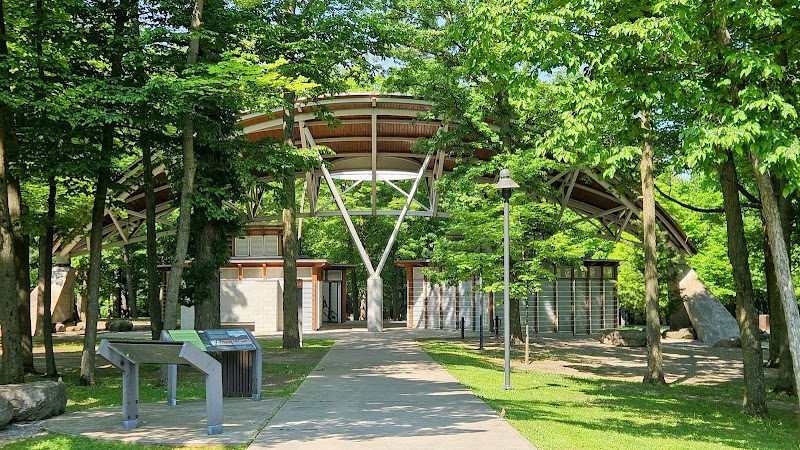
- The Hart Massey pavilions — three linked structures completed in 1958 along a single axis: a bus shelter, an entry pavilion and a refreshment stand. Their hexagonal canopies stand on individual black steel posts like a small grove, with white tongue-and-groove wood ceilings and yellow and orange beams cantilevering out from the centre. They won a silver Massey Medal for Architecture in 1958 and were carefully rehabilitated in 2012, when the original canopy colours were put back.
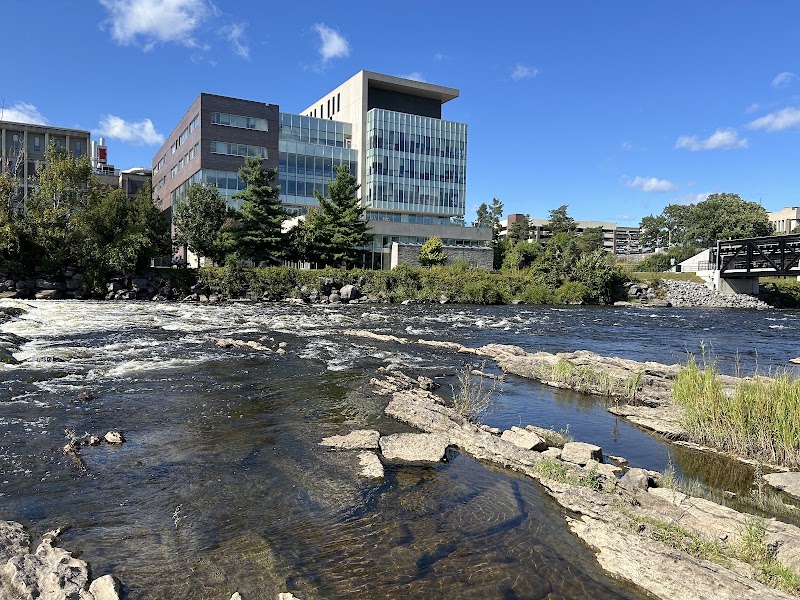
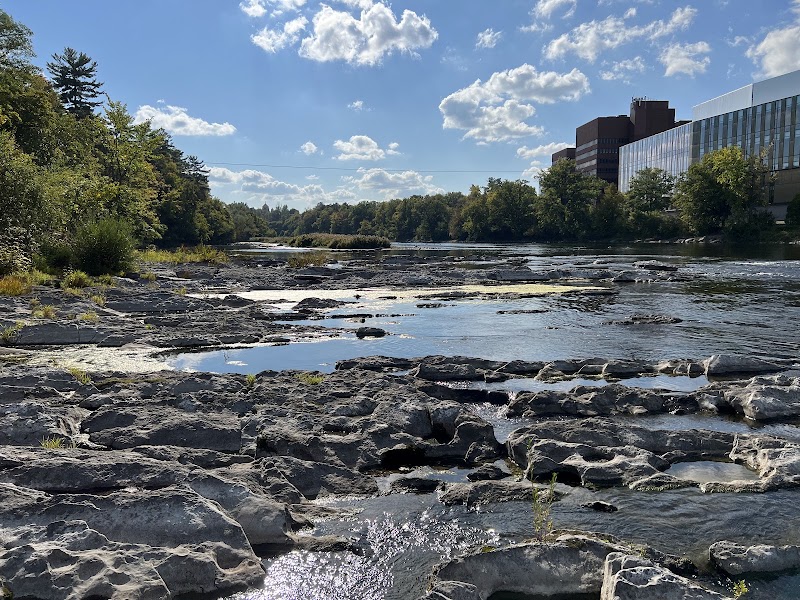
- The riverbank — a long, open frontage on the Rideau River, calm water with the Hog’s Back rapids upstream, and the sound of the river carrying across the meadows on quiet mornings.
- The National Day of Mourning monument — placed here by the Canadian Labour Congress and dedicated on 28 April 1987 as the national monument to workers killed and injured on the job. It stands deliberately within sight of the bridge where nine construction workers died in 1966, and a memorial ceremony is held here every 28 April.
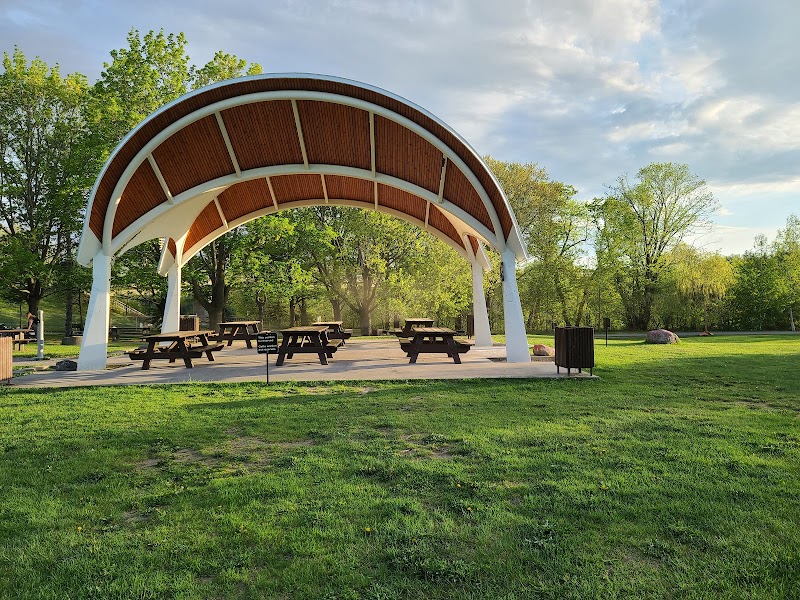
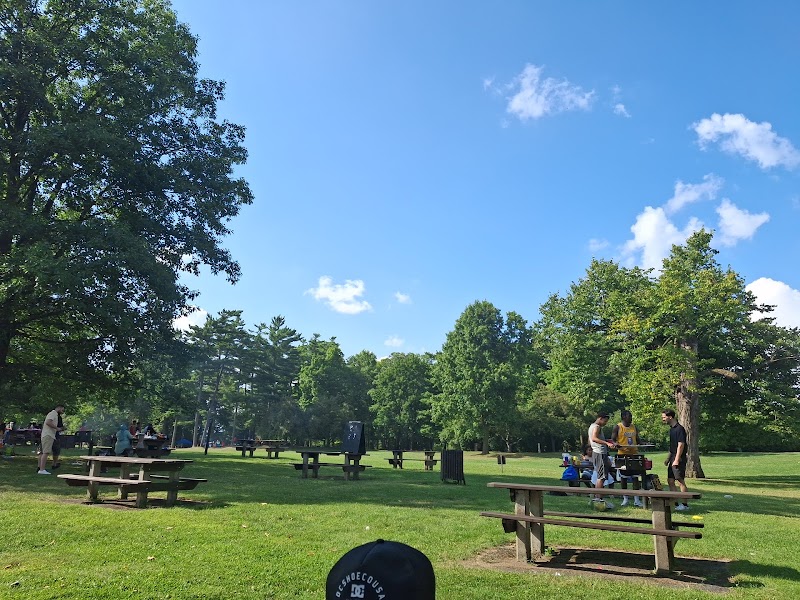
- The picnic infrastructure — barbecue pits, tables scattered through both sun and shade, shelters and water points, built at a scale most city parks never attempt.
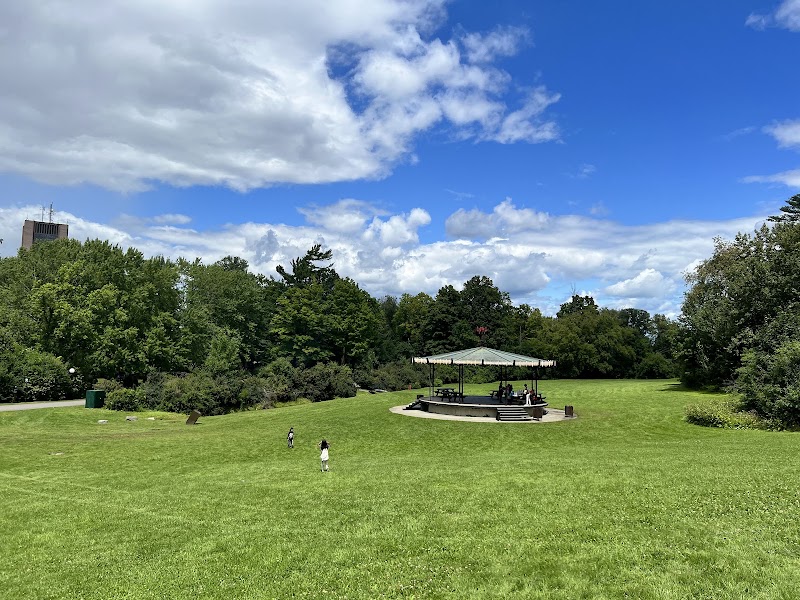
- The bandstand and ball diamonds — a bandstand for outdoor music plus two softball diamonds, holdovers from an era when a park was expected to entertain a whole workplace on its annual outing.
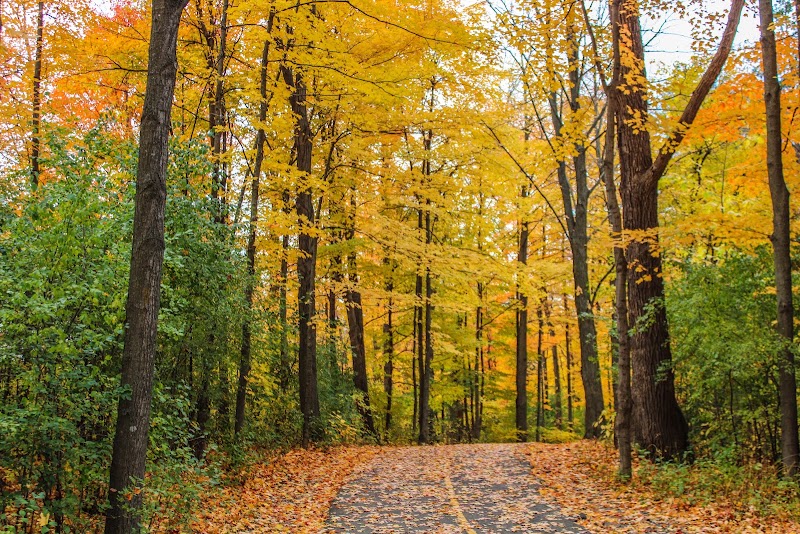
- The tree cover — genuinely mature woodland with shaded walking paths, which is why the park stays comfortable on the humid days that Ottawa summers reliably deliver.
What you’ll find
The layout is generous rather than clever: broad grass, a wooded fringe, paths that wander instead of pointing, and the river as the eastern boundary. It covers 28.9 hectares, which gives it something almost no downtown green space in Ottawa has — room to lose a crowd. The National Capital Commission manages it, and it connects directly into the capital pathway network that runs along the Rideau River, so cyclists and runners pass through it constantly on their way between Hog’s Back and points north.
- Rolling open meadow and large grassy areas suitable for informal games and group gatherings.
- Wooded walking paths under mature trees, with scenic vistas over the river.
- Picnic tables, barbecue pits and shelters spread through the grounds.
- A bandstand, two softball diamonds and drinking-water points.
- Seasonal washrooms and universally accessible facilities along the main routes.
- An on-site parking area and direct access to the riverside cycling and walking pathway.
Things to do — and who it’s for
- Families and large groups — this is the picnic park of the capital: tables, grills, shade, open grass and enough space that nobody is sitting in anybody’s lap.
- Walkers and trail runners — a quiet loop of wooded paths and river frontage, with the capital pathway network continuing in both directions if you want distance.
- Cyclists — the park is a natural rest stop on the Rideau River route between Hog’s Back and the downtown canal.
- Architecture and design enthusiasts — the 1958 pavilion group is one of the most admired small modernist ensembles in the capital region and takes ten minutes to appreciate properly.
- Anyone interested in labour history — the national workers’ monument and its annual 28 April ceremony make this a site of real civic significance, not just a lawn.
- Birdwatchers and quiet-seekers — early mornings on the wooded riverbank are among the calmest in the city, well away from downtown noise.
Getting there & practical
The park lies in Confederation Heights, on the west bank of the Rideau River, immediately across from Hog’s Back Park. By transit, Mooney’s Bay station on O-Train Line 2, the Trillium Line, is the closest rail access and puts the park within a short walk — the station was in fact called Confederation station until it was renamed in December 2017 to avoid confusion with Line 1. Several OC Transpo bus routes serve the surrounding government office campus as well. Entry to the park is free; only the on-site parking is paid, operating year-round on a pay-at-exit basis. The park itself is open daily from May to mid-October, weather permitting, from 7 am until dusk and no later than 10 pm, with washrooms running from 8 am to dusk over the same season. Note the site rules before you plan: amplified music, tents, open fires, alcohol, commercial activity and pets are not permitted, and since May 2026 the National Capital Commission no longer issues picnic reservations or special-event permits here — the grounds are for informal use on a first-come basis. Facilities are occasionally affected by repairs, so it is worth checking current advisories if you are counting on drinking water or a particular shelter. Allow two hours for a walk, or most of a day for a proper picnic.
When to visit
Spring is short and dramatic here: the Rideau River runs high and loud with meltwater, the meadows green up through late April and May, and the park reopens for the season in May after the winter closure. Summer is what the park was built for — long evenings, barbecue smoke, families spread across the grass, and enough tree cover to survive the humidity that settles over the Ottawa valley in July and August. Autumn may be the best walking season of all: the mature canopy turns through the second half of September and October, the crowds thin sharply, and the river reflects the colour with almost no boat traffic to disturb it. Winter is a genuine feature of this landscape rather than a dead zone, but it is also the one season with a caveat — the park’s seasonal operation runs only to mid-October, so winter here is about the surrounding riverside pathway network and the frozen Rideau rather than the picnic grounds themselves. Ottawa cold is not decorative: January averages sit well below minus ten and dip much lower, snow cover is deep and lasts for months, and the river ice and bare hardwoods along this stretch make for a stark, beautiful walk if you are properly dressed.
Good to know
The park opened in 1958 under a much plainer name — Hog’s Back Park and Picnic Grounds — as part of the National Capital Commission’s postwar push to build recreational space for a growing capital. It was renamed the following year, in 1959, for Charles Vincent Massey, the 18th Governor General of Canada, who served from 1952 to 1959 and was the first Canadian-born holder of the office. Massey’s larger legacy is cultural: he chaired the royal commission of 1949 to 1951 that carries his name, whose report led directly to the Canada Council for the Arts and the National Library of Canada. There is a neat family symmetry in the park, because the 1958 pavilions were designed by the Ottawa architect Hart Massey, Vincent Massey’s son, and they took a silver Massey Medal for Architecture the same year they were finished. The park was originally continuous with Hog’s Back Park; the two were split in 1969 when a road was pushed through between them. The most sombre chapter belongs to that road: on 10 August 1966, a span of the bridge under construction over the Rideau River collapsed while more than sixty men were pouring concrete, killing nine — Ontario’s worst workplace disaster. In 1987 the Canadian Labour Congress placed its national monument to workers killed and injured at work in this park, in sight of the bridge, and the bridge itself was renamed in the workers’ memory in 2016.
Visitor tips
- Arrive early on summer weekends. Reservations are no longer issued, so shaded tables near the water go to whoever gets there first.
- Leave the dog at home — pets are not permitted in this park, unlike most of the riverside pathway around it.
- Walk the pavilion axis before you settle in: the three 1958 structures line up deliberately, and the canopy colours only read properly when you look up from underneath them.
Questions & answers
Is Vincent Massey Park free to enter? Yes. Admission to the park is free at all times. Only the on-site parking is paid, and it runs year-round on a pay-at-exit basis.
When is the park open? It operates seasonally, daily from May to mid-October, weather permitting, from 7 am until dusk and no later than 10 pm. Washrooms are open over the same season from 8 am until dusk.
Can I book a picnic spot or hold an event there? No. Since May 2026 the National Capital Commission no longer offers picnic reservations or special-event permits at this location. Use is informal and first-come, and amplified music, tents, open fires, alcohol and commercial activity are not allowed.
Are dogs allowed? No. Pets are not permitted within Vincent Massey Park, which surprises many visitors given how dog-friendly the surrounding Rideau River pathway is.
Who was the park named after? Charles Vincent Massey, the 18th Governor General of Canada from 1952 to 1959 and the first Canadian-born person to hold the post. He also chaired the 1949–1951 royal commission on the arts that produced the Canada Council for the Arts and the National Library of Canada.
What is the monument in the park? It is the Canadian Labour Congress’s national monument to workers killed and injured on the job, dedicated on 28 April 1987 and sited within view of the bridge where nine workers died in a 1966 construction collapse. A National Day of Mourning ceremony is held here each 28 April.
How do I get there by O-Train? Take Line 2, the Trillium Line, to Mooney’s Bay station and walk from there; the station carried the name Confederation until December 2017. Several OC Transpo bus routes also serve the surrounding office campus.
What makes the pavilions special? They were designed by Ottawa architect Hart Massey and completed in 1958, winning a silver Massey Medal for Architecture that year. Three structures — bus shelter, entry and refreshment stand — line up on one axis under hexagonal canopies carried on single steel posts, and a 2012 rehabilitation restored their original colours.
Photos
Show 1 more photos
Visitor reviews
Reviews last updated: 2026-08-04 20:17:45
Data is refreshed monthly. Sources: ottawa.name and editorial picks based on reviews.
A spacious, large park filled wall to wall with picnic tables and yes… charcoal grills.
Framed by mature trees and to the right of the Rideau River.
Parking is paid by the hour until 22:00.
But you can park either by…
Vincent Massey Park is a spacious, tree-filled place to relax along the Rideau River, a popular spot for picnics, group gatherings and quiet walks. It has large open fields, shaded picnic areas with barbecue spots and pa…
A great park along the Rideau River with lots of picnic tables, fountains, washrooms and barbecues. A nice forest with mature trees. Missed the early fall photo with all that red foliage. A great bike path, but hilly, so…
A very pleasant place Nice beach , picnic spot, playground
The place is nicely laid out There's a bike path, washroom, drinking water fountains
Nearby there are wonderful waterfalls, lots of animals all around are a joy…
A paradise for picnic lovers. This park has countless picnic tables set up, all well maintained and spaced apart. The washrooms are clean, and there's also access to scenic trails. No wonder there's paid parking here, bu…