

Park · Ottawa · ⭐ 9.7/10 · 2891 reviews · updated: 2026-08-04 20:17:44
Address: Mackenzie Ave, Ottawa, ON K1N 6Z4, Canada
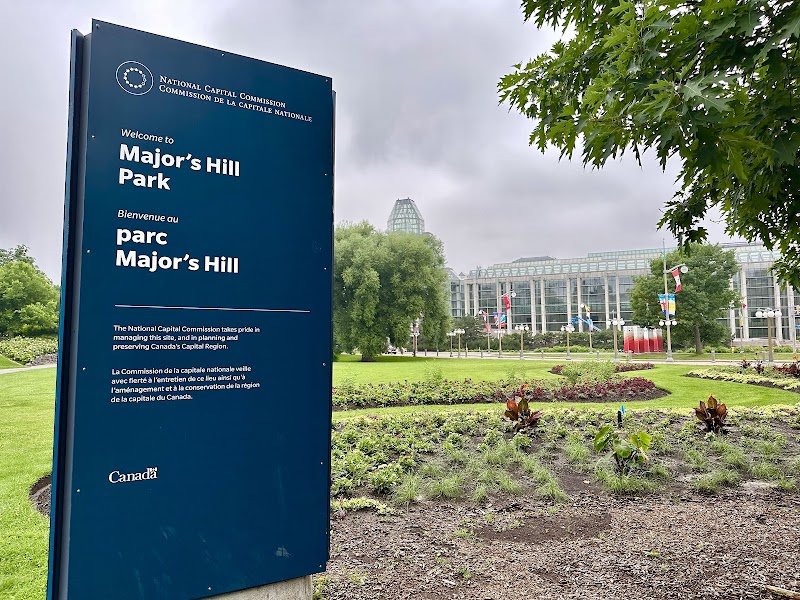
Major’s Hill Park — the capital’s first park, on the bluff above the locks
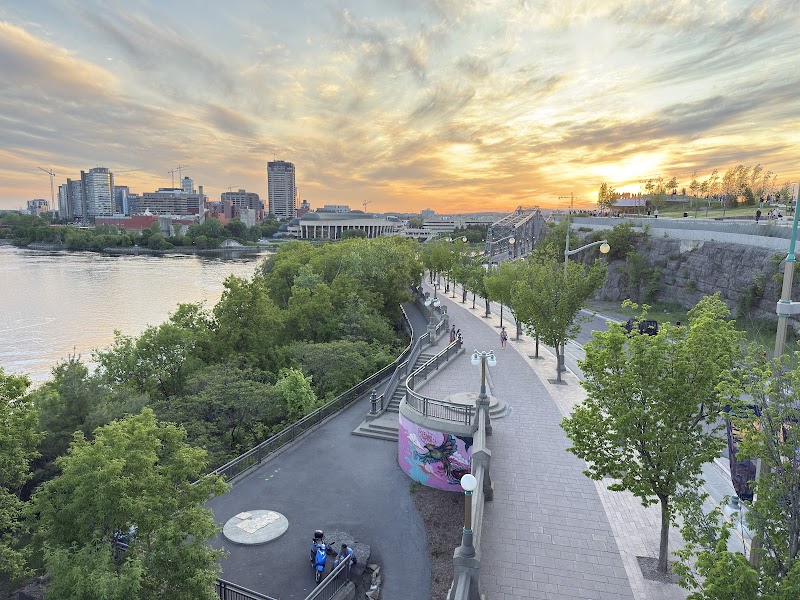
Most cities keep their best view for a private club or a hotel roof. Ottawa gave its away. Major’s Hill Park occupies the grassy bluff at exactly the point where the Rideau Canal steps down through its flight of locks into the Ottawa River, and the lawn ends in a railing with the whole postcard laid out beneath it: the Gothic towers of Parliament on one side, the wide grey river and the Gatineau hills on the other, and the stone staircase of the locks working away directly below. It has been open ground since 1826, which makes it the capital’s oldest park — older than Canada itself, and still the place where the city goes to look at itself.
Highlights
- The lookout over the Ottawa Locks — eight stone chambers lift boats roughly twenty-four metres from the river to the canal. This is the original engineering of Lieutenant-Colonel John By’s Rideau Canal, completed in 1832 and inscribed as a UNESCO World Heritage Site in 2007, and you watch the whole slow, creaking process from the bank above.
- Colonel By’s ruins — the stone footings of the Superintending Engineer’s official residence, which burned on 5 October 1848. They lay forgotten until 1973, when National Capital Commission historian Dr. Mary Burns led an archaeological dig that uncovered them; they are now framed by a free-standing group of history markers in the northwest corner.
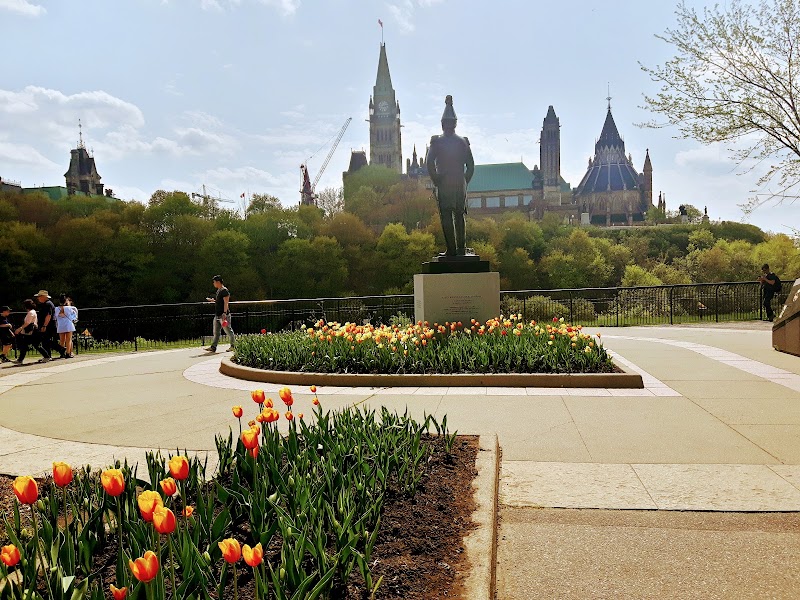
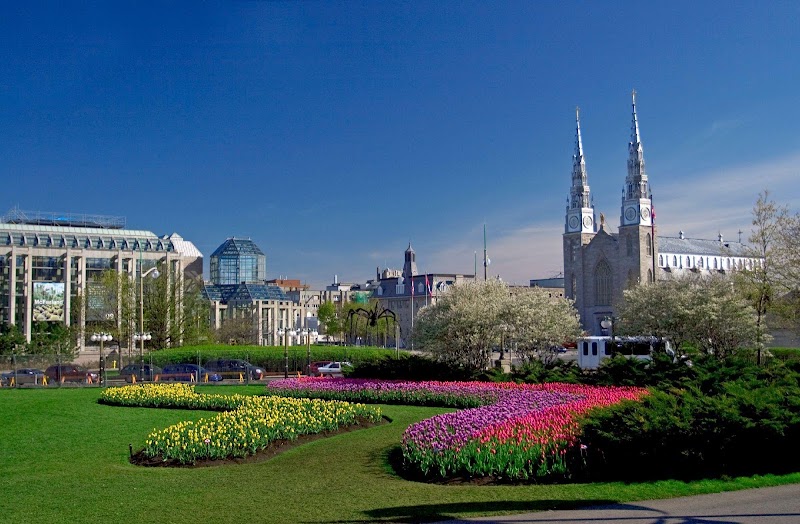
- The tulip beds in May — the park is one of the signature sites of the Canadian Tulip Festival, with a curving S-shaped bed threading the east end opposite the National Gallery of Canada and a long rectangular planting near the bronze statue of Colonel By.
- Header House — the surviving header section of a greenhouse complex built in 1937–1938, now recycled as Tavern on the Hill, a seasonal open-air canteen and patio serving locally sourced food and ice cream with the river in front of it.
- The Colonel By statue — By stands in bronze looking out over the waterway he cut through the Canadian Shield, the reason a lumber village called Bytown existed at all.
- The tree canopy — stately mature specimens over rolling lawn, unusual for a downtown block, and a large part of why the park stays cool and quiet even when the ByWard Market a short walk east is heaving.
What you’ll find
Major’s Hill is compact — a little over five hectares — but it is built in layers, so it never reads as small. The ground rises from the canal edge in a series of terraces and lawns, winding paved paths thread between them, and every few dozen paces the view changes: locks, then river, then Parliament, then the National Gallery’s glass tower. It is maintained by the National Capital Commission as one of the official capital parks, which means the horticulture is unusually good for a public square and the sightlines are deliberately protected.
- Rolling open lawn, terraces and winding paved pathways, all step-free along the main routes.
- Formal seasonal flower beds, including the celebrated May tulip displays.
- Several signed lookouts over the Ottawa Locks, the Ottawa River and Parliament Hill.
- Interpretation panels covering Bytown, the canal and the vanished residence on the hill.
- Picnic-friendly grass and scattered benches, with the seasonal Tavern on the Hill patio for anyone who did not bring lunch.
- Public washrooms open roughly May to October, from morning until dusk.
Things to do — and who it’s for
- First-time visitors to Ottawa — twenty minutes here orients you better than any map: canal, river, Parliament, gallery and market are all visible or within a short walk.
- Photographers — the bluff gives you Parliament in profile with the locks in the foreground, a composition impossible from Parliament Hill itself; late afternoon light comes across the river and lands on the stone.
- History readers — the ruins, the markers and the statue tell the founding story of the city in one loop of about fifteen minutes.
- Families with young children — safe open lawn well back from the drop, room to run, ice cream in season and boats to watch locking through, which children find far more absorbing than adults expect.
- Museum-goers — the National Gallery of Canada is immediately north, so the park works as the free half of a museum day, before or after.
- Festival crowds — the park is central to the capital’s Canada Day programme, hosts tulip-season events in May and the annual gathering that precedes the Glengarry Highland Games.
Getting there & practical
The park sits in the downtown core between the ByWard Market district and the canal, wedged between the National Gallery of Canada to the north and the Fairmont Château Laurier to the south. By transit it is easiest from Rideau station on O-Train Line 1, the Confederation Line, which puts you a few minutes’ walk away; a large number of OC Transpo downtown routes also stop within a short walk, and the whole ByWard and Parliament area is comfortably walkable once you are here. Entry to the park is free and always has been — there is no gate, no ticket and no season. Paths are open year-round and around the clock, while washrooms and the seasonal canteen run roughly from May to October, morning to dusk. Underground paid parking exists beneath the National Gallery, but downtown driving here is genuinely worse than walking. Budget forty-five minutes to an hour for the park alone, or a full half-day if you fold in the gallery and the market.
When to visit
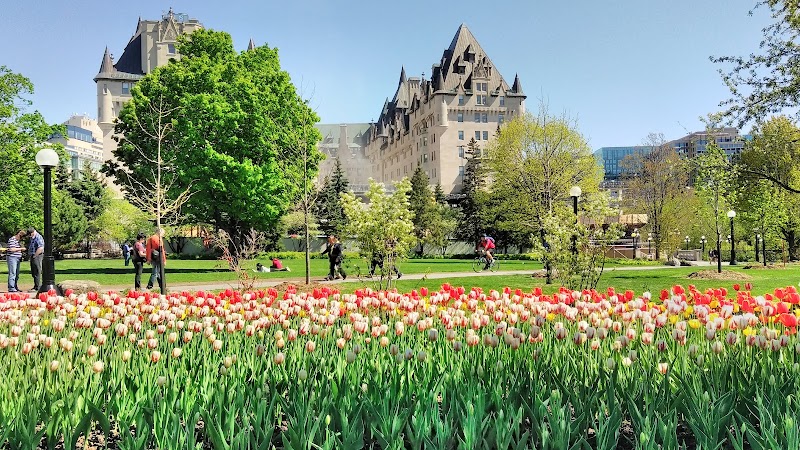
Spring is the headline: from late April the beds break, and by the first half of May the tulip displays turn the park into one of the busiest photo stops in the country — go before nine in the morning if you want the flowers without the crowd. Summer is long and social; the sun sets late, the patio opens, boats queue at the locks, and on 1 July the park becomes one of the main stages of the national holiday. Autumn is the connoisseur’s season — the mature canopy turns, the river goes steel-grey, the tour buses thin out, and the light gets low and gold by four in the afternoon. Winter is not a season to write off here, because Ottawa winters are a genuine feature rather than an obstacle: the Rideau Canal Skateway begins at the locks directly below the park, Winterlude fills the downtown in February, snow simplifies the lawns into clean white terraces, and the bare trees actually open up sightlines to Parliament that the summer canopy hides. Dress for real cold — minus twenty is an ordinary January morning — and the park is one of the best free viewpoints in the city.
Good to know
The hill has been public ground since 1826, when construction of the Rideau Canal began and Lieutenant-Colonel John By, the Superintending Engineer, built his official residence on the crest. It was called Colonel’s Hill then. By returned to England in 1832, the year the canal opened, and was succeeded by Captain Daniel Bolton, who moved into the same house; Bolton was promoted to Major in 1838, and by the time he left Bytown in 1843 the name had shifted to Major’s Hill and stuck. The house burned on 5 October 1848 and was never rebuilt. In 1867 bonfires and fireworks on this hill marked the capital’s very first Dominion Day, and the park was formally established in 1875. It has given up ground since: the Château Laurier, built between 1909 and 1912, stands on land carved out of the park’s southern edge, and the National Gallery of Canada opened on its northern flank in 1988. For decades a noon gun was fired here as a time signal until the National Capital Commission ended the tradition in the early 1980s. Like all of Ottawa, the hill stands on unceded Algonquin Anishinàbe territory, a fact the newer interpretive signage now states plainly.
Visitor tips
- Walk the bluff from the Château Laurier end toward the National Gallery rather than the reverse — the view of Parliament and the locks opens up in front of you instead of behind.
- Time your visit to a lock cycle if you can; when a boat is descending the flight, the park’s best free entertainment runs for the better part of an hour.
- During the tulip weeks and on 1 July, come early or come late. Mid-afternoon on those dates the lawns are shoulder to shoulder, and both the light and the mood are better at either edge of the day.
Questions & answers
Is Major’s Hill Park free to enter? Yes. It is a public capital park managed by the National Capital Commission, with no admission charge at any time of year and no gate. Ticketed events are occasionally staged on the grounds, but the park itself is always free to walk through.
Why is it called Major’s Hill? After Captain Daniel Bolton, who succeeded Colonel By as Superintending Engineer of the Rideau Canal in 1832 and lived in By’s house on the crest. Bolton was promoted to Major in 1838, and by his departure in 1843 locals had renamed the rise from Colonel’s Hill to Major’s Hill.
What are the stone ruins in the park? They are the footings of the official residence built for Lieutenant-Colonel John By in the 1820s, destroyed by fire on 5 October 1848. They were excavated in 1973 under National Capital Commission historian Dr. Mary Burns and are now presented with a group of history markers.
Is it worth visiting in winter? Very much so. The Rideau Canal Skateway begins at the Ottawa Locks immediately below the park, Winterlude activity fills the surrounding downtown in February, and with the leaves gone the views toward Parliament are actually wider than in summer. Dress properly and it is one of the best cold-weather viewpoints in the capital.
Where are the tulips? In two main displays during the Canadian Tulip Festival in May: a curving S-shaped bed at the east end of the park across from the National Gallery of Canada, and a long rectangular bed toward the Château Laurier end near the statue of Colonel By.
How do I get there by public transport? Take O-Train Line 1, the Confederation Line, to Rideau station and walk a few minutes north; numerous OC Transpo bus routes also serve the downtown core within easy walking distance of the park.
Are there washrooms and food? Yes, seasonally. Public washrooms operate roughly from May to October, from morning until dusk, and Tavern on the Hill — housed in the surviving 1937–1938 Header House greenhouse structure — runs as an open-air canteen and patio during the warm months.
How long should I allow? Forty-five minutes to an hour covers the lookouts, the ruins and the statue at a relaxed pace. If you pair the park with the National Gallery of Canada and the ByWard Market, plan on half a day.
Photos

Show 1 more photos
Visitor reviews
Reviews last updated: 2026-08-04 20:17:44
Data is refreshed monthly. Sources: ottawa.name and editorial picks based on reviews.
This place is never boring, whether in summer or winter, during the day or in the evening, whether you're a resident here or just a visitor. It's a great place for a walk, a light picnic or simply enjoying a beautiful su…
Major's Hill Park – Ottawa, Ontario
Major's Hill Park is one of Ottawa's most picturesque and historically significant parks. Located in the very heart of downtown, directly across from the Parliament Buildings, this be…
Especially beautiful during the tulip festival in May, Major's Hill Park is a truly wonderful place to visit when you're in the nation's capital. Just a few minutes' walk from the ByWard Market, Parliament and great outd…
Le Parc Major's Hill est un endroit magnifique pour se détendre et profiter d’une des plus belles vues d’Ottawa. Le parc est très bien entretenu, calme et parfait pour une promenade ou un moment de repos en plein centre-…
One of my favourite places in Ottawa
You can lie on the grass
Lovely views from the bridge
Interesting monuments
You can even treat yourself to crabapples))