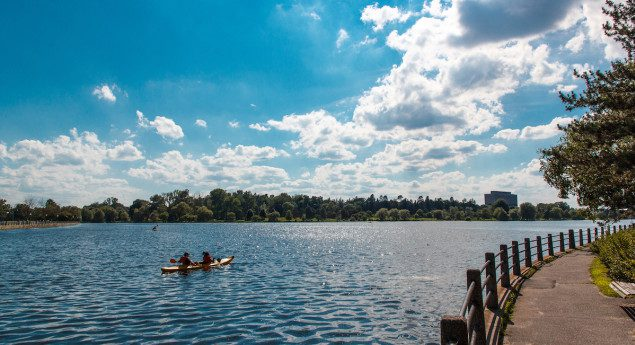

Dow’s Lake is a pearl in the heart of Ottawa, beloved by locals and visitors alike. It serves as a hub for recreational activities, offering ice-skating in winter and canoeing or kayaking in summer. Its rich history brims with transformation and importance, making it a site worth exploring. Ottawa Name dives into the captivating story of Dow’s Lake.
How It All Began
The lake was named after Abraham Dow, an early settler from the United States who arrived in Ottawa in 1814 and purchased “Lot M in Concession C” in the small town of Gloucester. Samuel and Mabel Dow also settled nearby but returned to the U.S. in 1826, discouraged by the challenges of living near the swamp, including mosquitoes, diseases, and other hardships.
Once an expansive swamp extending to Ottawa’s northern parts, the area was a major obstacle for construction projects. Gradually, the swamp’s northern and southern shores were blocked by dams, creating the navigable Dow’s Lake that we know today.
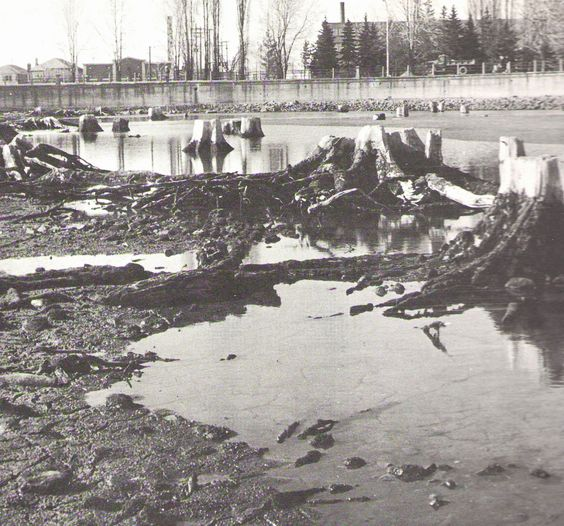
Clearing the land for the canal was not easy. Workers had to cut down pine trees and remove stumps. Supervised by Colonel John By, Royal Sappers and Miners worked diligently to create Dow’s Lake. Historical accounts highlight the difficulties of constructing the canal between Bytown and Kingston, specifically the stretch between the Ottawa River and Hog’s Back.
Colonel By explored two potential routes:
- Connecting the Ottawa River and Hog’s Back by cutting a canal from above Chaudière Falls.
- Building a canal along Preston Street, which was simpler but would reward land speculators—a prospect Colonel By refused to support.
Flooding Dow’s Swamp
To proceed, “By Drive” was built under the direction of Philemon Wright, though Wright himself declined involvement in the dam’s construction. In 1870, a major fire in Ottawa led to the breach of the St. Louis Dam to save the city.
Colonel By constructed the canal at Entrance Bay, east of Parliament Hill. The swamp along present-day Preston Street was drained in the process.
In its early days, Dow’s Swamp was considered one of the gloomiest areas, especially the so-called “Cranberry Swamp.” Malaria was rampant, claiming the lives of many workers. Colonel By himself fell ill but managed to recover. Despite the hardships, By’s leadership raised the swamp’s water level, transforming it into Dow’s Lake.
Changing Attitudes Toward Dow’s Lake
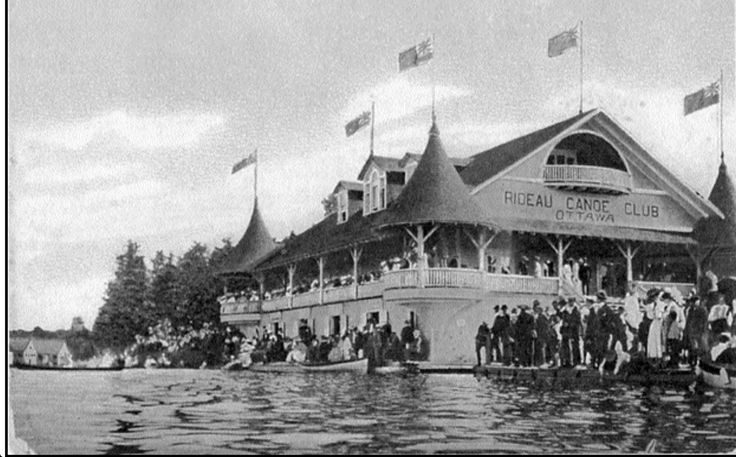
For much of the 19th century, Dow’s Lake remained unnoticed by locals. However, as Ottawa grew, so did the city’s proximity to the lake, particularly with the establishment of the Central Experimental Farm. The extension of the electric tramway to the farm increased public interest, turning the lake into a spot for swimming and boating.
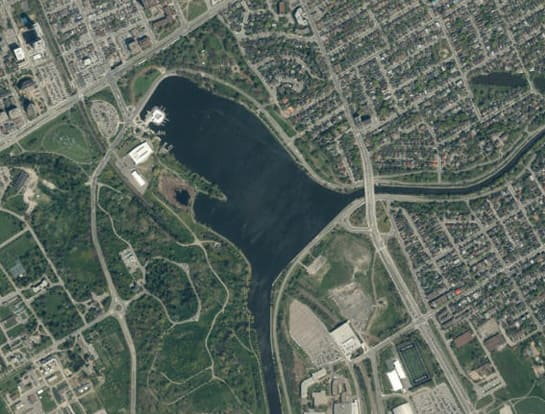
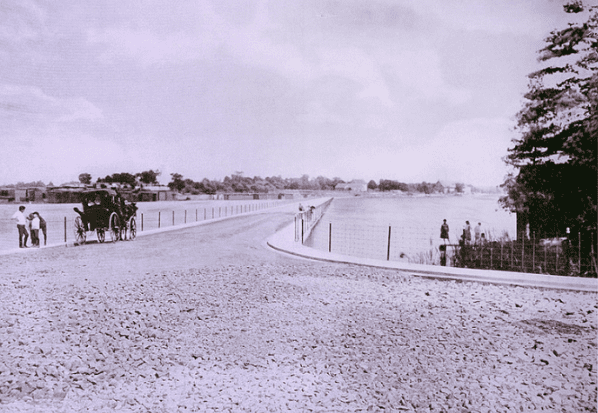
In 1899, the government established the Ottawa Improvement Commission, which proposed building a diagonal dam across Dow’s Lake. By 1904, a dam was constructed, connecting Lakeside Avenue to Preston Street and the Experimental Farm. This dam split the lake in two.
However, not all plans materialized. For example, the Commission’s ambitious vision for a large aviary inspired by the Bronx Zoo in New York never came to fruition due to high costs. The aviary was intended to house various Canadian bird species.
The Dam at Dow’s Lake
The dam lasted for 25 years but faced criticism for its narrowness, high curbs, and lack of nighttime lighting, which caused frequent accidents. In 1926, the National Capital Commission, led by Thomas Ahearn, proposed removing the dam and expanding access roads around the lake—a plan that echoed earlier proposals from Ottawa’s former mayor, Fred Cook. In 1927, the Dominion government approved the project.
Dismantling the Dam at Dow’s Lake
In 1928, water levels in the Rideau Canal were lowered, allowing the dam’s dismantling to begin. Workers planted trees along new access roads to conceal the remnants of the dam’s structure. By March 1929, the dismantling project was completed.
Water flowed back into Dow’s Lake, restoring its clean and picturesque appearance. The dam’s remnants—stone clusters hidden beneath the water—no longer pose a threat to navigation. In 1936, further work was conducted to deepen areas around the old dam’s foundation, which enhanced winter fishing by attracting fish to deeper waters.
Today, the dam is largely forgotten, though its traces resurface during fall when low water levels reveal narrow stone islands. Historical hydrographic maps provide a glimpse into the dam’s exact past location.
Dow’s Lake and Its Surroundings
The area around Dow’s Lake is unique, featuring a large park near the Rideau Canal’s entrance. The once-extensive “Great Dow’s Swamp” has transformed into a vibrant lake surrounded by homes and scenic properties on its southeastern corner.
Modern-Day Dow’s Lake
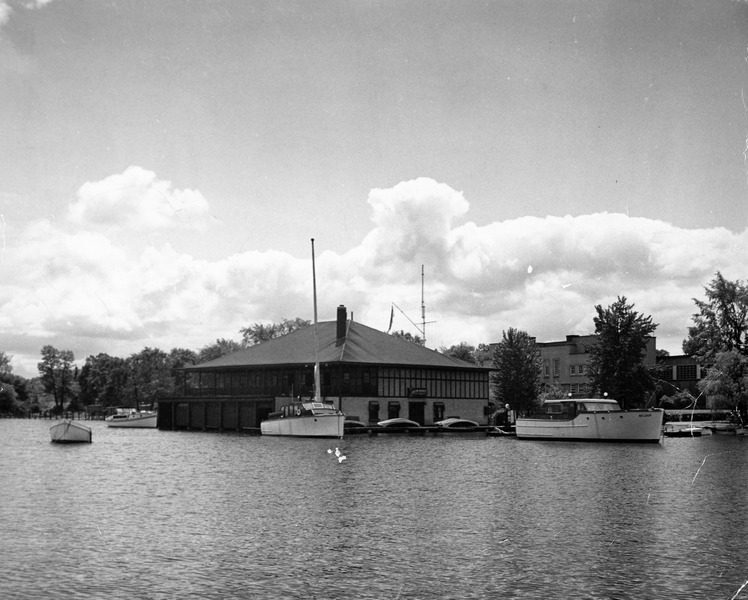
Dow’s Lake is now a hub for summer and winter recreation. The Dow’s Lake Pavilion is a key attraction, welcoming boaters traveling between Kingston and Ottawa via the Rideau Canal. Visitors can rent canoes and paddleboats or enjoy the surrounding cafes and restaurants.
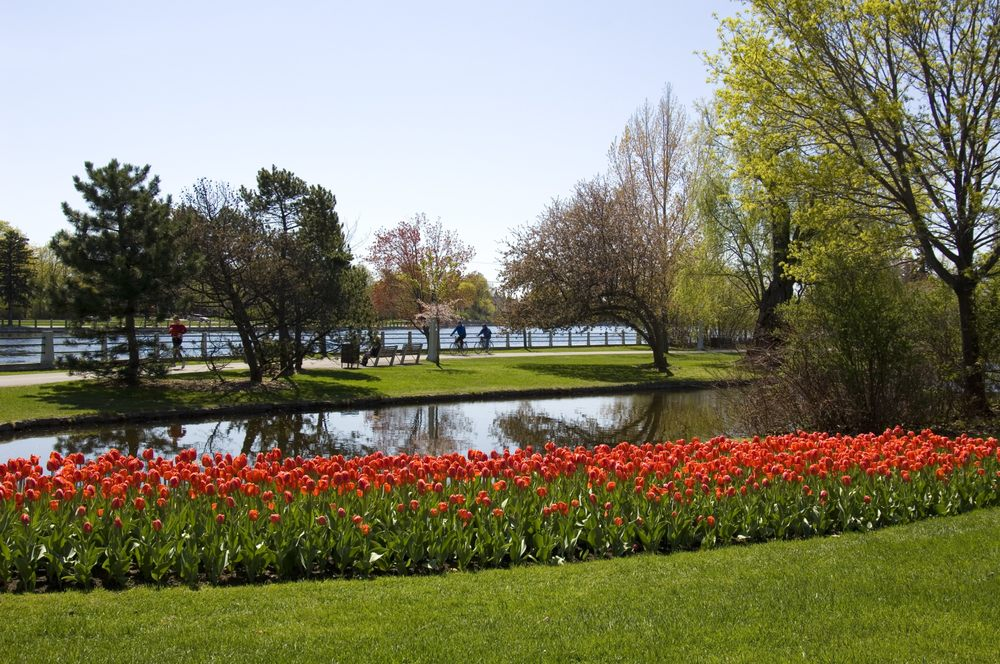
Paths and parks encircle the lake, attracting runners, cyclists, and walkers. The lake’s location is ideal for exploring Ottawa’s charm, with Dominion Arboretum on one side and Commissioners Park on the other. Loved by Ottawa residents, Dow’s Lake is a must-visit location that offers recreation, beauty, and a deeper connection to the city’s history.