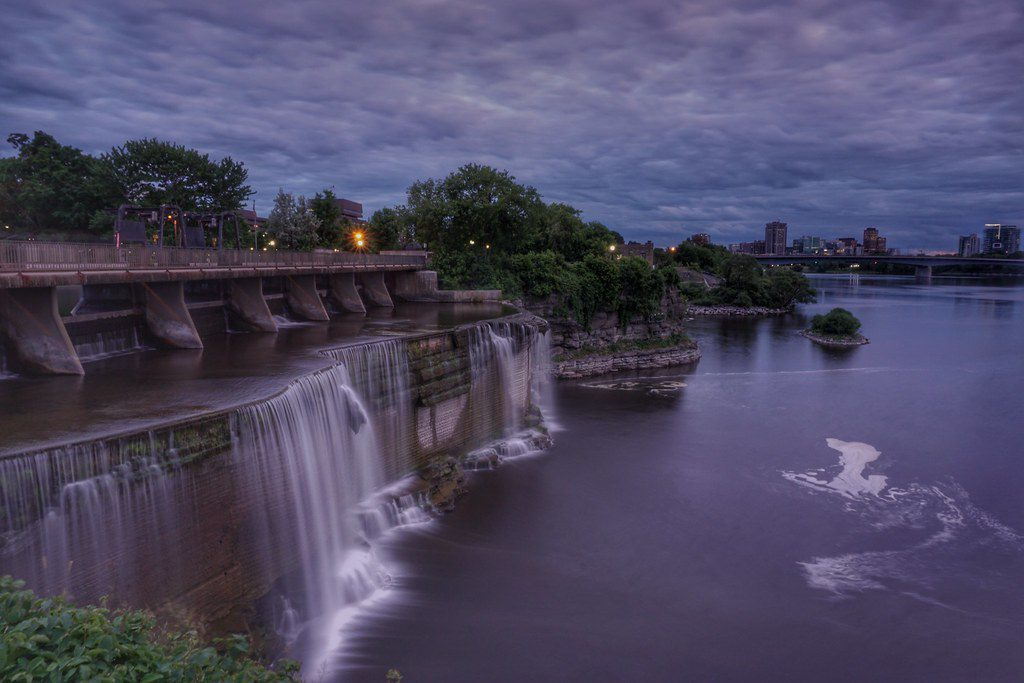

The Rideau River, spanning 100 km from the Rideau Lakes to the Ottawa River, flows through limestone-rich agricultural lands that once formed an ancient seabed. The river merges into the Ottawa River via a dramatic limestone ledge, offering both breathtaking views and strategic importance.
Ottawa Name explores the history of the Rideau River, the construction of the Rideau Canal, and fascinating facts that are worth discovering for locals and visitors to Canada’s capital.
A Safe Route to Upper Canada
Decades after the founding of the United States and the War of 1812, tensions over the potential annexation of Canada remained unresolved. Upper Canada (modern-day Ontario) was particularly vulnerable during any conflict, as much of the southern bank of the Ottawa River was under American control, making vital supply routes easy targets.
To mitigate this vulnerability, Canadians sought an alternative water route to the Great Lakes. Tensions escalated during the War of 1812 between Britain and the United States, but Canada emerged relatively unscathed. This fortuitous outcome intensified efforts to establish a secure route through the Rideau River to bypass the Saint Lawrence River.
The Rideau Canal System: Planning Stage
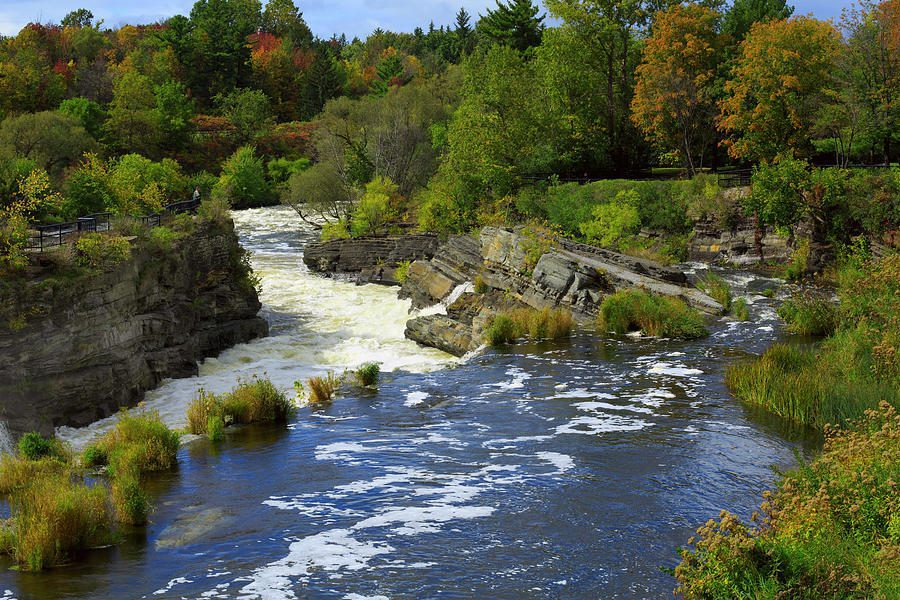
The goal after the War of 1812 was to create a safer waterway. One proposed route began in Montreal, following the Ottawa River to the mouth of the Rideau River, then southward along the Rideau and through several lakes to the Cataraqui River. This path, however, was not fully navigable, as some stretches were impassable for boats. The solution was to construct a series of locks connecting Ottawa to Kingston.
Despite its potential, the project required substantial funding, which the British government initially declined to provide. The idea gained traction, however, thanks to the influential Duke of Wellington, who appointed Colonel John By to oversee the construction of the Rideau Canal.
John By’s Arrival and the Creation of Bytown
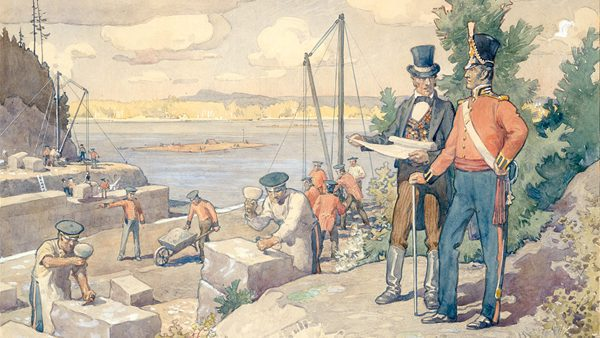
In 1826, Colonel By arrived at Bytown (later renamed Ottawa) and established his headquarters at the mouth of the Rideau River. The ambitious project aimed to:
- Build a series of dams and locks to allow boats to travel between Bytown and Kingston.
- Construct locks initially designed for small barges.
- Expand the locks to a minimum size of 41 metres long and 10 metres wide, accommodating the larger steamships emerging on the Great Lakes.
Construction began in 1827. Colonel By and the Royal Engineers designed the Rideau Canal, while private contractors handled much of the construction. Most locks and dams were built from stone, with iron components crafted locally by blacksmiths.
The workforce included settlers from Lower Canada, local residents, and immigrants, predominantly from Ireland. Many workers succumbed to malaria, contracted in the Dow’s Swamp area along the route. Even Colonel By himself fell ill but managed to recover. The project’s dangerous conditions meant a constant need for new labourers.
The Name Rideau and Interesting Facts
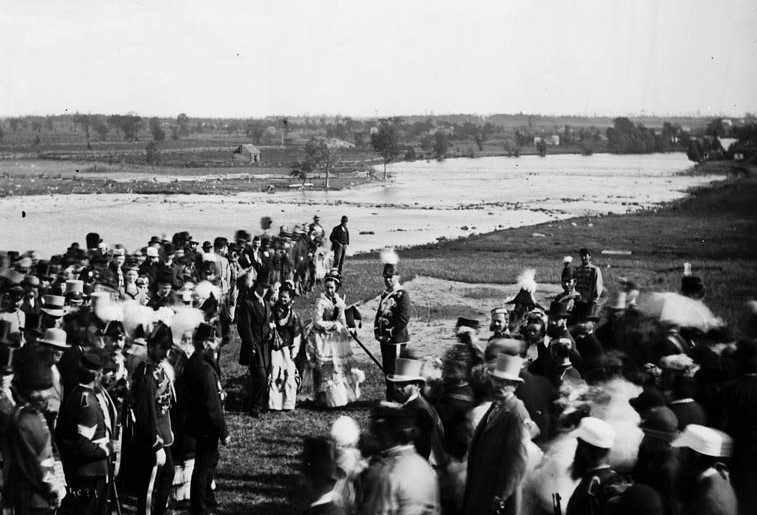
The Rideau River was first seen by Europeans when Samuel de Champlain explored its confluence with the Ottawa River. Inspired by the natural beauty, he named it Rideau, the French word for “curtain.”
Here are some noteworthy facts:
- The Rideau River played a critical role as a transportation route between the Ottawa River and the St. Lawrence River.
- The vulnerability of the St. Lawrence River after the War of 1812 highlighted the need for an alternative route. Colonel John By designed and constructed the Rideau Canal, connecting Kingston—a naval fortress in Upper Canada—to Montreal, a military stronghold in Lower Canada.
- The canal links the Rideau River to a network of locks and dams, integrating it into the Rideau Canal system.

Remarkable Achievements and the Canal’s Opening
The Rideau Canal officially opened in 1832, an engineering marvel spanning over 202 km through largely uninhabited wilderness. To overcome natural obstacles, Colonel By and his team constructed 47 locks and numerous defensive structures, including blockhouses and fortified lock stations, which would serve as strongholds in case of attack.
Despite the canal’s strategic importance, its construction cost £800,000, a staggering sum for the time, led to controversy. British authorities investigated By for alleged overspending, ultimately clearing him of wrongdoing. Nevertheless, he received no recognition for his accomplishments, and he retired in disgrace, passing away four years later.

Rise and Decline: The Changing Role of the Rideau Canal
Originally built as a wartime alternative to the St. Lawrence River, the Rideau Canal quickly became a vital commercial route connecting Montreal to the Great Lakes. Its golden age was short-lived, however, as improved navigation on the St. Lawrence in 1849 made the canal less essential.
Although its commercial use waned after World War I, the canal’s historical and cultural significance endured. The cost of dismantling the system was deemed prohibitive, ensuring its preservation.
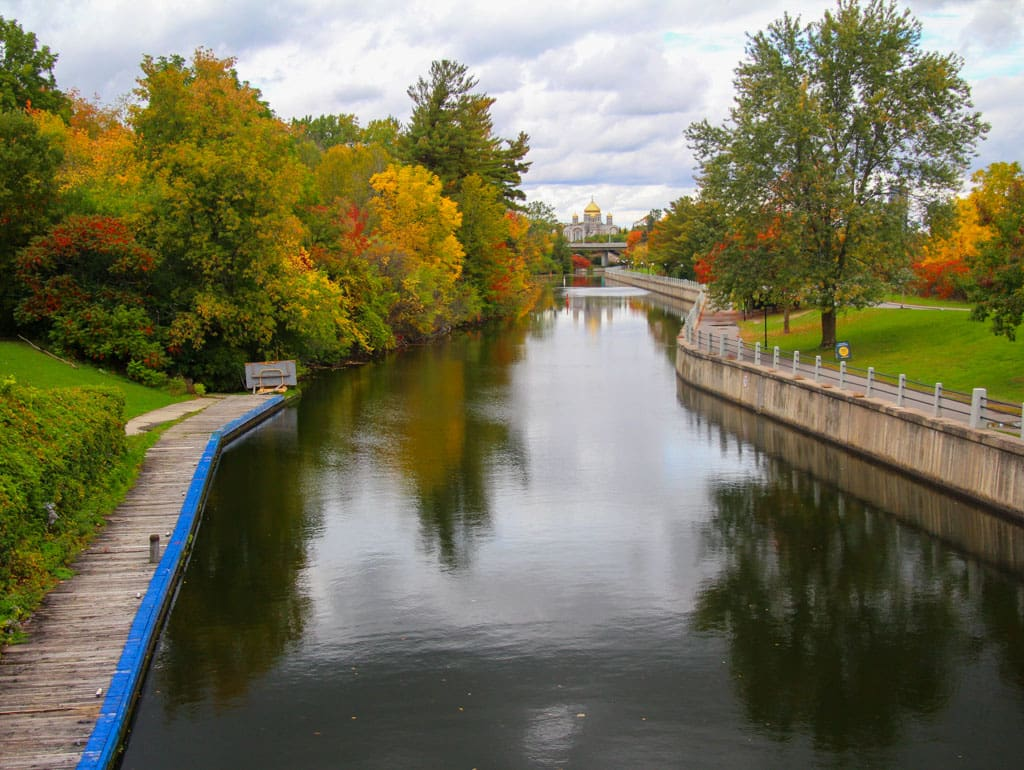
A New Perspective on the Rideau
The construction of locks and dams transformed the natural flow of the Rideau River, flooding rapids and creating new lakes and wetlands. In 2000, the Rideau Canal was designated part of Canada’s Heritage Rivers System, further solidifying its cultural and historical importance.
Today, the Rideau River and Canal attract thousands of visitors annually, who come to experience its natural beauty and partake in recreational activities. From boating and fishing to cottaging along its shores, the Rideau remains an iconic feature of Canada’s landscape.
The Rideau River and Canal system are enduring testaments to engineering ingenuity and historical significance. A vital part of Canada’s heritage, they continue to captivate locals and tourists alike, offering a unique glimpse into the country’s rich past while serving as a cherished natural and recreational resource.