

Many residents of Ottawa likely don’t realize when recycling was first introduced in their city or when their predecessors began considering environmental issues and the consequences of human activity.
Until the mid-20th century, recycling as a concept didn’t exist. Attitudes toward the environment changed dramatically in 1965, as people began to realize that air pollution and growing piles of waste were causing illnesses and increasing mortality rates. More details on ottawa.name.
When Did Ottawa Start Thinking About Pollution?
Ottawa implemented its first waste recycling system in 1965. However, even before then, efforts were made to address the city’s garbage problem. Historical records include a mention in an 1879 issue of an Ottawa journal, where the editor discussed high mortality rates caused by inadequate waste management.
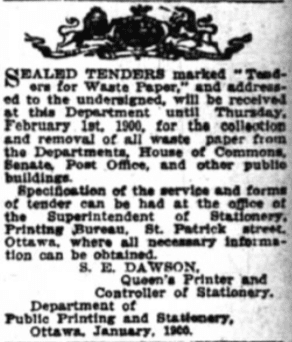
Early Attempts at Waste Disposal
In the 19th century, pollution posed a significant threat to the health of Ottawa’s residents. It wasn’t until the early 20th century that conditions began to improve. Interestingly, these changes were driven not by environmental concerns but by the potential for increased municipal revenue through recycling, particularly paper recycling.
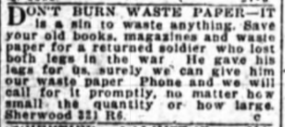
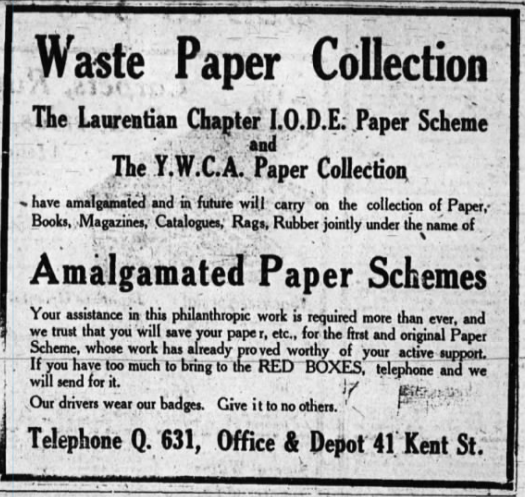
In the early 1900s, red paper collection bins were installed on nearly every street corner in Ottawa. Residents deposited paper in the bins, which were later emptied, weighed, and sold. Proceeds were used to support soldiers fighting in France. This early process of selling paper for a cause was referred to as “recycling.”
For residents with large quantities of paper, transporting it to collection bins posed challenges. To address this, the city enlisted private vehicle owners to help deliver the paper. A hotline was later established so residents could call for pickups.
This paper collection program was highly successful, raising approximately $20,000 annually for the Canadian military during the early 1900s. However, by the 1920s, declining paper prices rendered the initiative unprofitable, leading to its temporary discontinuation.
Paper Collection During World War II
During World War II, paper collection resumed with greater frequency and efficiency. Funds from the program continued to support Canadian troops, and collection methods became more organized. Trucks were dispatched to gather paper, and residents were provided with large bags for packaging.
During this period, Ottawa also began collecting other materials, such as scrap metal, glass, and tin cans. However, after the war, paper collection volumes dropped dramatically, with annual totals falling from 3,000 tons during the war to less than 200 tons post-war.
Reviving Large-Scale Recycling
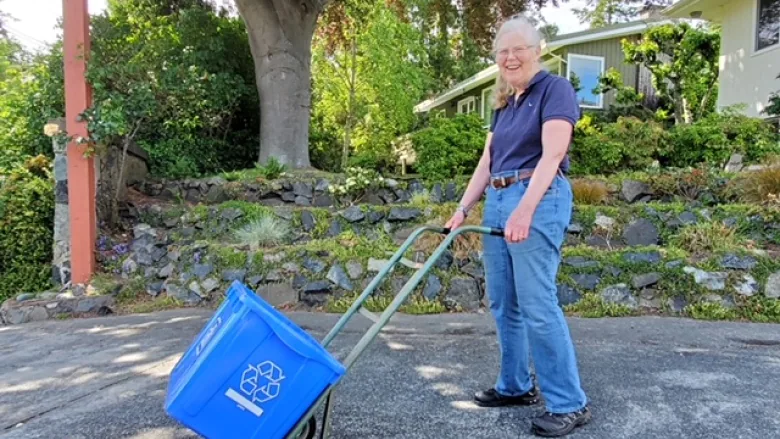
In the 1970s, large-scale paper recycling made a comeback, this time motivated by environmental concerns rather than financial incentives. The deteriorating ecological state of the city prompted renewed efforts to address waste.
Initially, the program began as a three-month campaign. Its success led to an extension and eventual establishment as a permanent initiative. Residents embraced recycling as a tradition, and for the first time, Ottawa began working with companies specializing in secondary paper processing.
Challenges in Engaging Ottawa Residents
Despite the program’s early success, some residents were hesitant to participate. Initial collection efforts in the 1970s yielded only 400 tons of paper—far below expectations. This resulted in significant financial losses, amounting to over $6,000, although the collected paper saved approximately 4,000 trees.
Eco-Consciousness in 21st-Century Ottawa
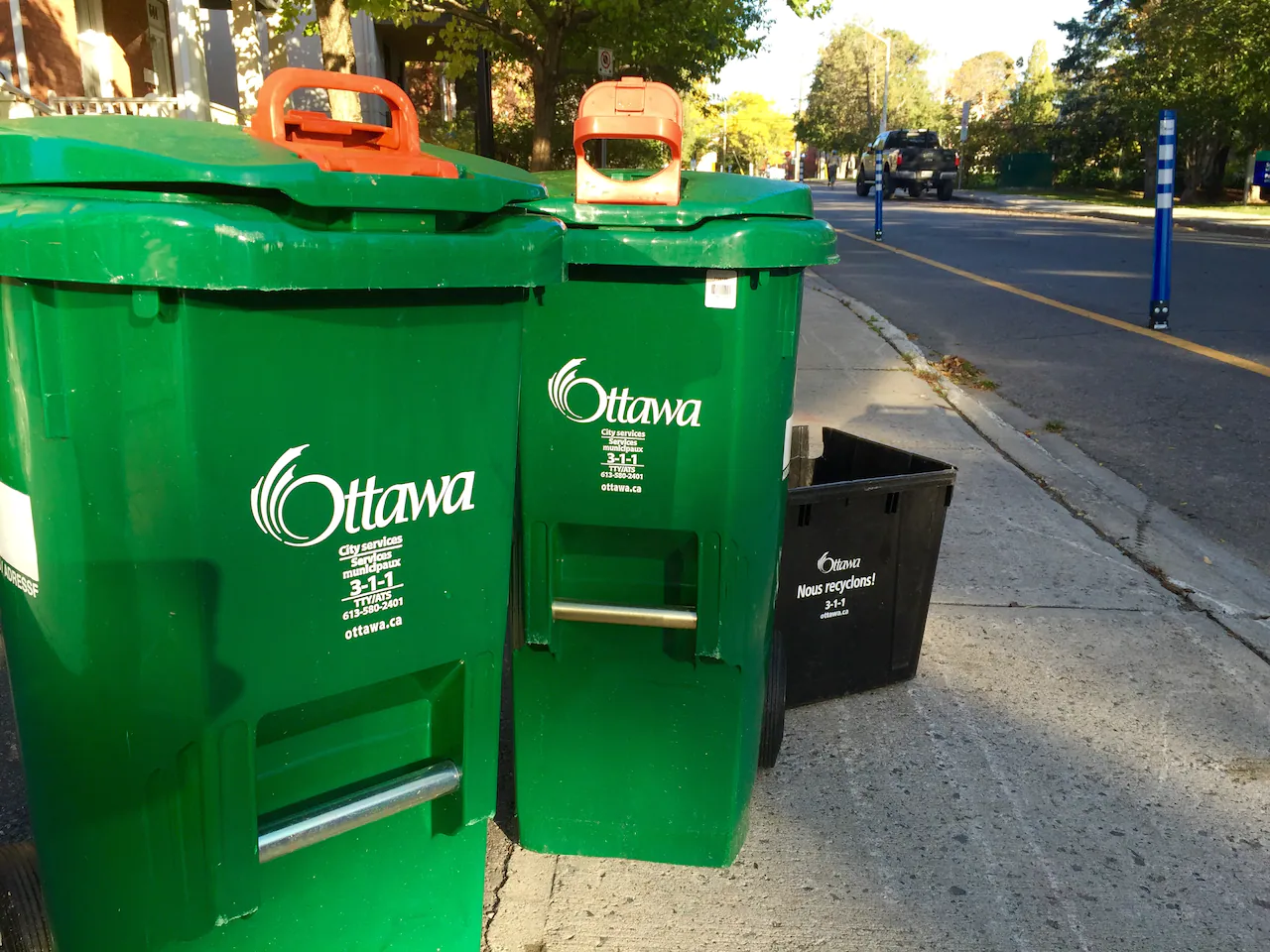
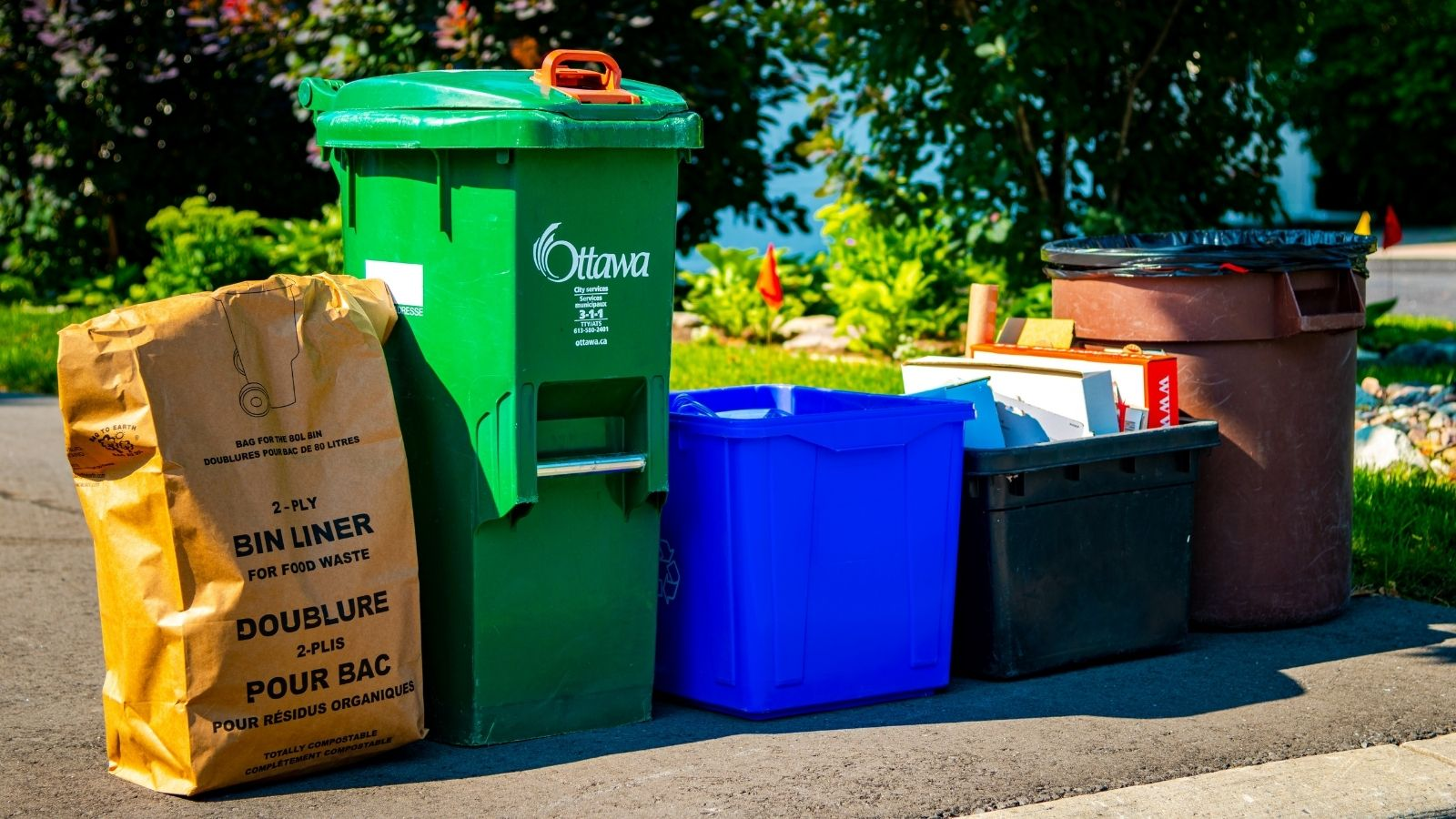
Fifty years later, Ottawa has become a model of eco-conscious living. Residents now not only recycle paper but also sort organic waste, metals, and plastics. Special bins for each type of waste are a standard feature near most homes.
Today, 93% of newspapers and 90% of cardboard in Ottawa are recycled, alongside other waste materials. Only 40% of municipal waste ends up in landfills, with the rest undergoing processing for reuse. Recycling has evolved from a sporadic initiative to an integral part of life in Ottawa.
The journey from basic waste collection to modern recycling systems reflects a significant transformation in the city’s approach to environmental responsibility.