

The Marquis wheat variety was specifically developed for cultivation in Canada, notable for its early ripening quality, which expanded the safe-growing regions for wheat. Ottawa Name explores the history of early mills and the development of this remarkable wheat variety.
The History of Wheat and Early Mills in Canada
Wheat first appeared in Canada in 1605, with the grain milled using a water-powered mill installed at Port Royal, Nova Scotia. In 1717, Louis Hébert of Quebec became the first local planter to harvest wheat.
Wheat farming gradually moved westward, thanks to European settlers. Historically, settlers brought wheat varieties from their homelands to Canada. However, these varieties—such as Golden Drop, Clawson, and Red Chaff—struggled in Canada’s cold climate, affecting the quality of bread.
The situation changed in 1842 with the introduction of Red Fife wheat to Canada. This variety thrived in the Canadian climate and significantly improved the taste of bread and baked goods. It spurred increased wheat farming and the establishment of rail systems to transport it.
Tracing the Roots of Red Fife
Dr. George Fedak, a cereal cytogeneticist who emigrated from Ukraine to Canada in 1929, uncovered fascinating details about Red Fife’s origins. His Ukrainian compatriot, Stephen Symko, who worked at Ottawa’s Central Experimental Farm until 1976, further explored its history in his publication Out of One Seed (1999).
Symko recounted how a single Ukrainian seed ended up with David Fife, a farmer in Otonabee, Ontario, who planted it in 1842. The resulting spring wheat later played a pivotal role in the development of Marquis wheat. Historical accounts, including A.H. Reginald Buller’s Essays on Wheat (1919), confirmed that Red Fife was identical to a wheat variety from Galicia, Western Ukraine.
Dr. William Saunders
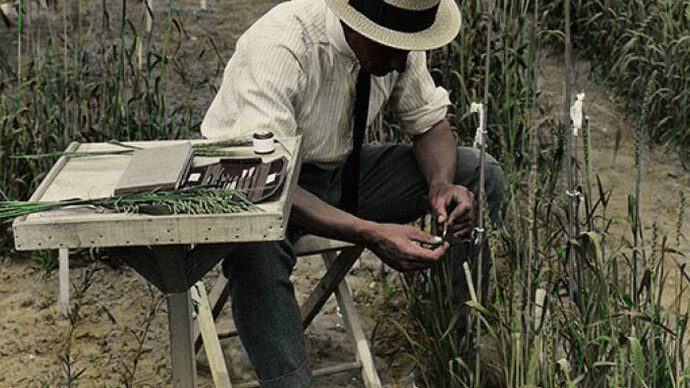
Dr. William Saunders, a pioneering agronomist and the father of Marquis wheat, relocated to Ottawa in his 50s. He spearheaded the creation of five experimental farms, including Ottawa’s Central Experimental Farm, which became a hub for agricultural innovation. Saunders and his team developed resilient fruit trees and advanced grains through cross-pollination and hybridization.
In 1886, Saunders and John Carling, Canada’s Minister of Agriculture, initiated the Experimental Farm Service in Ottawa to research and develop agricultural solutions for Canadian farmers.
William Saunders and the Invention of Marquis Wheat
William Saunders’ contributions to agriculture were monumental. Recognizing the drawbacks of Red Fife wheat, particularly its late maturation, Saunders sought to develop a variety better suited to Canada’s climate. He crossed Hard Red Calcutta (an Indian variety) with Red Fife, selecting the most promising offspring for cultivation.
The result was Marquis wheat, celebrated for its exceptional yield and superior baking quality.
Canada’s Best Wheat Variety
In 1911, the Canadian Pacific Railway held a competition to identify the best wheat variety in Canada, offering a $1,000 gold prize. Marquis wheat outperformed its competitors, cementing its reputation.
By 1918, 80–90% of Canada’s wheat acreage was planted with Marquis, generating $500 million in annual revenue. The variety positioned Canada as the world’s leading wheat exporter, bolstering the war efforts of the Allies during World War I.
The Enduring Legacy of Marquis Wheat
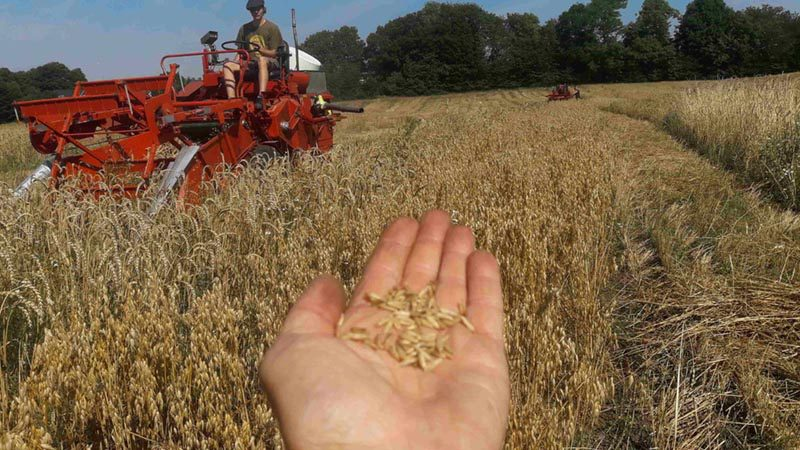
Marquis wheat remains integral to Canadian agriculture, with nearly every modern wheat variety in the country tracing its lineage back to it. Breeders continue to uphold the high standards of quality and yield established by Marquis, ensuring Canadian wheat’s global reputation.
Fascinating Figures
- In 1919, the fixed price of Grade 1 Marquis wheat was $0.04 per pound. By 2020, it had risen to $0.09 per pound, marking a modest increase over a century.
- In 1982, 1.15 million acres of wheat were planted, with 98% used for bread and baked goods and 2% for livestock feed. By 2019, only 425,000 acres were planted, with 74% allocated to feed and 26% for food production.
Marquis Wheat Bread
Known as “True Love” bread, Marquis wheat bread revives the forgotten textures and flavors of traditional baking. Made simply with water, salt, and high-quality flour, it embodies a culinary heritage deeply connected to the past.
Ottawa residents can purchase organic Marquis wheat flour to bake their own bread or enjoy freshly baked loaves at Vancouver’s Granville Island Bakery. This remarkable grain continues to connect Canadians with their agricultural history.