

In the mid-19th century, a mill was constructed on Ottawa’s outskirts, designed to support local business by grinding grains and flour. The mill operated using the energy provided by the Rideau Canal. Remarkably, in the 21st century, this historic site continues to function, milling wheat and feed crops. Additionally, it has become a popular tourist attraction, drawing thousands of visitors annually, including Ottawa residents and tourists from across the country.
More details can be found at ottawa.name.
Ottawa’s Historic Mill
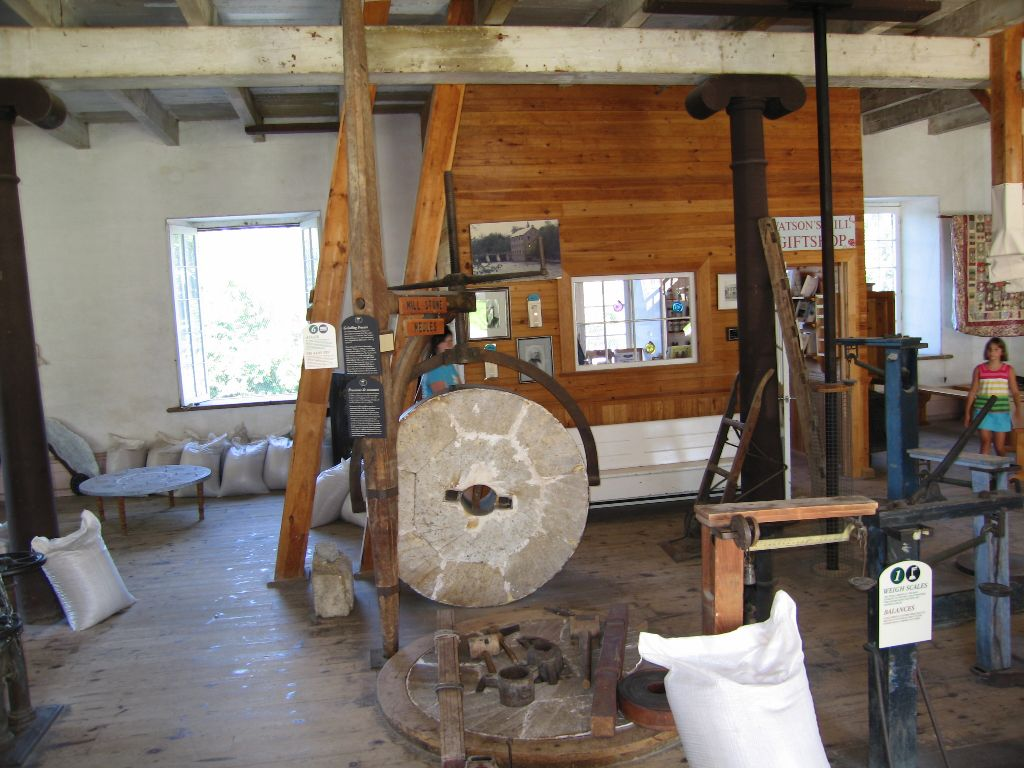
Watson’s Mill was built in the small village of Manotick in 1860. Initially known as the “Long Island Milling Enterprise,” the mill was later renamed “Watson’s Mill.”
The mill was a business venture spearheaded by two prominent Ottawa businessmen:
- Moss Dickinson – A successful 19th-century shipping magnate and steamboat owner, often referred to as the “King of the Rideau.” Dickinson also served as Ottawa’s mayor from 1864 to 1866.
- Joseph Currier – A prosperous lumber and sawmill baron.
Dickinson aimed to develop the Manotick area, including the land on which the mill was constructed.
For many years, the mill primarily milled flour and grains. However, the advent of the Canadian Pacific Railway and the subsequent availability of cheaper imported wheat and flour made local production less viable. To stay relevant, the mill transitioned to processing feed and seed crops. Its operation relied on the power generated by the Rideau Canal.
The Manotick mill was one of several mills built in Ottawa during that period. Originally named the Long Island Milling Enterprise under the ownership of Dickinson and Currier, it was later renamed “Watson’s Mill” in 1946 when it was purchased by Harry Watson. Watson was the mill’s last owner to use it for industrial purposes. In 1972, the mill was acquired by the Rideau Valley Conservation Authority and converted into a museum.
Watson’s Mill in the 21st Century
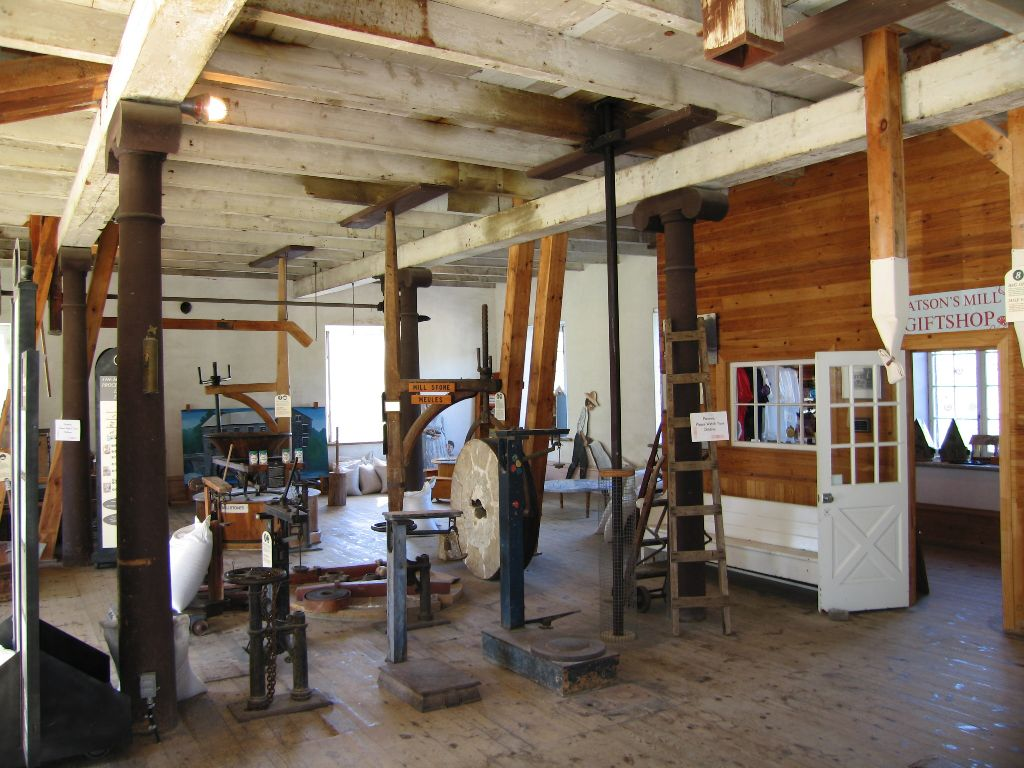
After being purchased by the Rideau Valley Conservation Authority, the mill underwent extensive restoration. The historic 19th-century structure was preserved and reopened as a museum exhibit.
In 2008, Watson’s Mill was acquired by a private company, breathing new life into the historic landmark. Today, the mill serves as a museum, a cultural and educational center for Ottawa residents, and a functioning industrial site where grains and feed crops are still milled.
Watson’s Mill, located in Manotick, holds the distinction of being the only working museum in the area and the sole operational mill in North America. Visitors can still purchase flour milled on-site using the historic equipment.
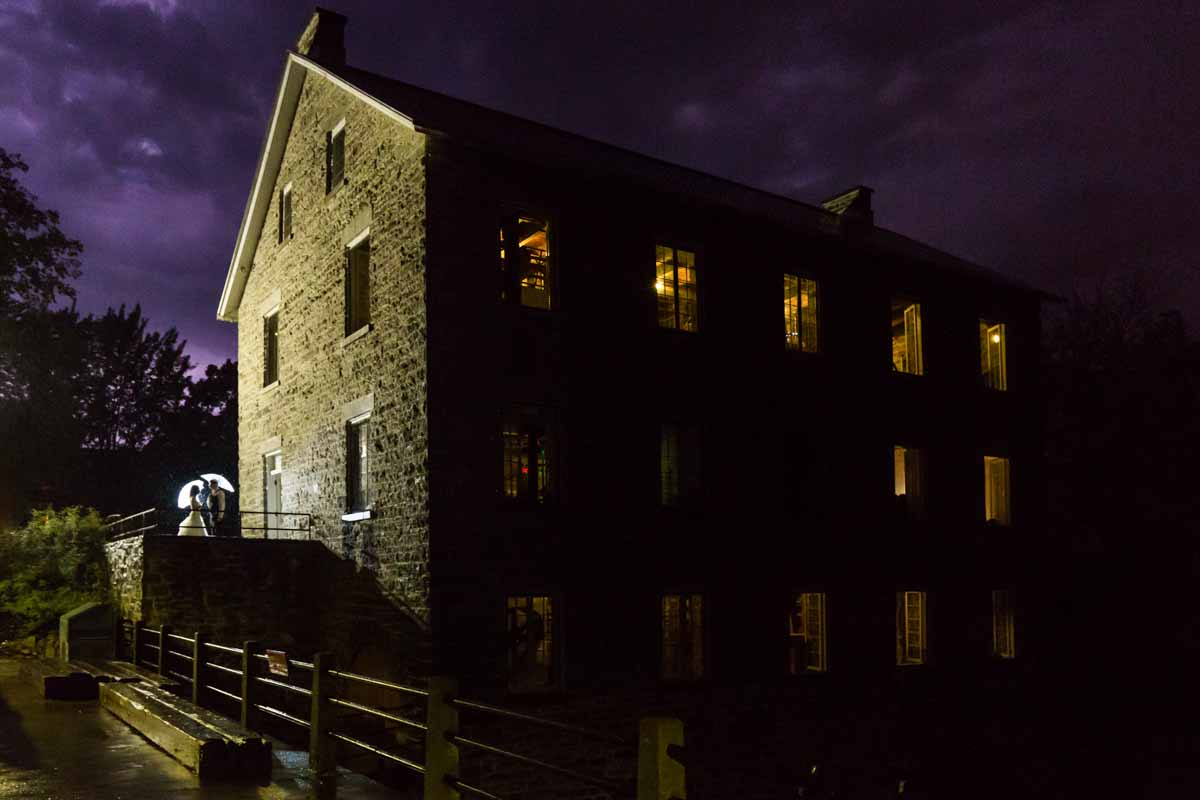
Each year, Watson’s Mill attracts thousands of visitors. Open as a museum during the summer months, the mill also hosts various events on its grounds. One unique draw for visitors is the legend of the ghost of Annabelle. According to local folklore, the spirit of Ann Currier, the wife of Joseph Currier and one of the mill’s original owners, haunts the building. Ann tragically died in a terrible accident in 1861.
Today, Watson’s Mill is a beloved landmark in Manotick. Its iconic image is widely used as a symbol of the small village and its historical charm.