

Alice Wilson was not only a talented and prominent geologist, biologist, and paleontologist but also the first woman in Canada to achieve significant success in the field of geology. Read more on ottawa.name.
Interest in Geology
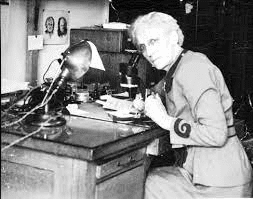
Born in 1881 in Cobourg, near Ottawa, Alice Wilson spent her childhood exploring forests, valleys, and rivers alongside her father and two brothers. These outdoor adventures, including canoeing and hiking, were a significant part of the Wilson family’s leisure time. During these excursions, young Alice became fascinated with rocks and fossils, sparking her lifelong passion for geology.
Alice’s scientific curiosity was encouraged by her family, who were all involved in academia. Their support fueled her interest and motivated her to pursue her intellectual pursuits.
When it came time for Alice to choose a career, she enrolled in Victoria College to study education. However, health issues forced her to interrupt her studies after less than four years. She eventually completed her degree in education in 1911. Her journey to earning a doctoral degree in geology required significant effort. In 1926, she was awarded a scholarship from the Canadian Federation of University Women, enabling her to study at the University of Chicago.
A Career in Geology
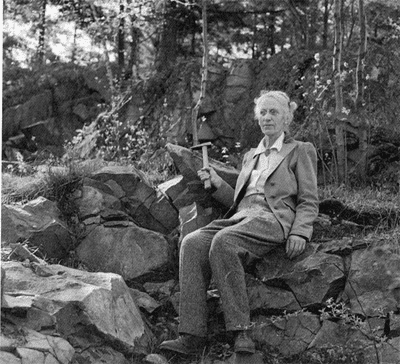
Alice began working shortly after leaving college due to health challenges. Without an academic degree, she secured a position at the museum affiliated with her university, working in the mineralogy department. Her enthusiasm and dedication to studying rocks made her work exceptionally fulfilling.
Three years later, Alice relocated to Ottawa and joined the Victoria Memorial Museum on Parliament Hill. Her exceptional work ethic and passion for geology led to a temporary clerk position at the Geological Survey of Canada (GSC), also housed in the Victoria Memorial Museum.
At the GSC, Alice undertook critical responsibilities, including translating geological and paleontological texts from German into English. After completing her formal education, she was offered a permanent role within the GSC.
However, the outbreak of World War I temporarily interrupted her work. With the Victoria Memorial Museum closed during the war, Alice moved to Long Island, where she studied marine biology and comparative anatomy while continuing her geological research.
After the war, Alice returned to Ottawa and resumed her work at the Victoria Memorial Museum, eventually becoming an assistant paleontologist. Over two decades, her commitment and expertise earned her the title of assistant geologist, making her the first woman to hold such a position at the GSC.
Despite her achievements, the GSC’s policies at the time restricted women from participating in fieldwork alongside men. Undeterred, Alice conducted her own field studies in the Ottawa area. She mapped over 14,000 square kilometers of the St. Lawrence Lowlands, exploring Ottawa’s geology on foot, by bicycle, and later by car.
Her efforts culminated in a groundbreaking scientific paper detailing Ottawa’s geological characteristics and economic resources, including sand, gravel, stone, and potable water.
Alice Wilson’s work had a profound impact on the field of geology in Ottawa and beyond. Her meticulous studies of rocks and fossils remain a valuable source of knowledge in the 21st century. She was Canada’s first female geologist and a trailblazer for women in science.
In her honour, Canada established the Alice Wilson Award for women scientists. Her name is also enshrined in Canada’s Science and Engineering Hall of Fame. Additionally, a commemorative plaque dedicated to Alice Wilson can be found at the Canadian Museum of Nature in Ottawa.
Alice Wilson passed away in 1964 at the age of 82, leaving behind a legacy of scientific excellence and inspiration for future generations of geologists.